Startups & Funding
Senra raises $65 million to modernize aerospace wire harnesses
Aerospace startup Senra raised $65 million to modernize the manual, Cold War-era process of manufacturing wire harnesses using proprietary software and automation.
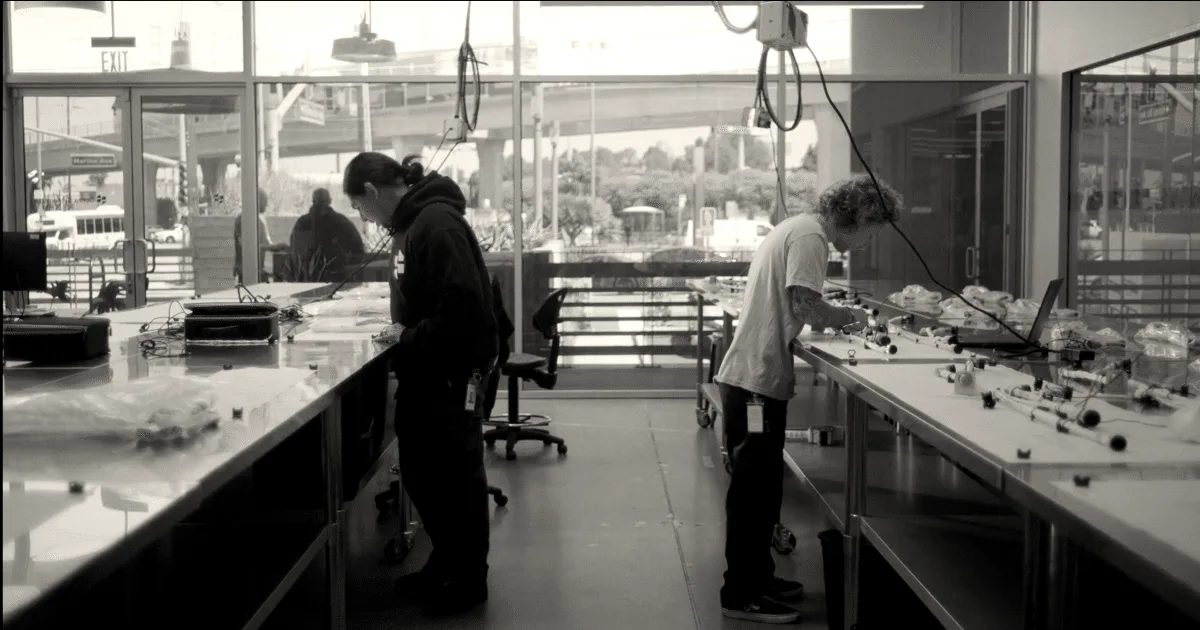
Senra, founded in 2023 by former SpaceX engineer Jordan Black and co-founder Benjamin Shanahan, has raised a $65 million Series B round — a growth-stage venture funding round — co-led by investors Lowercarbon and Interlagos, with participation from General Catalyst, Sequoia Capital, Andreessen Horowitz, and Founders Fund. The startup builds wire harnesses: the internal electrical cabling that runs through vehicles such as rockets, cars, planes, and tractors, and that becomes more important as those vehicles grow smarter.
Black said the industry looked largely frozen in time when he went searching for a modern supplier. “I traveled all over the world to go visit wire harness companies,” he said. “It really hasn’t changed since the Cold War era of wooden tables [and] manual processes.”
Senra is not looking to remove people from the handmaking process — at least not while robots find manipulating wires difficult and relevant training data remains scarce. Instead, the company is layering software and other forms of automation onto the traditional manual work. It uses a proprietary platform called Amp to standardize inputs across the process and generate a digital twin that guides technicians, who are trained through what Black describes as the only federally certified wire harness training program. Black has framed automation as something to add only after standardization is in place, pointing to his time at SpaceX helping scale Starship production as the model for that approach.
The company is benefiting from increased funding flowing into U.S. manufacturing and the defense industrial base. Black declined to name specific customers but said they include builders of submarines, maritime vehicles, land-based defense systems, launch vehicles, and satellites.
The stakes of getting wire harnesses wrong are real. In 2023, Boeing discovered that its Starliner spacecraft’s wiring was held together with flammable tape, forcing an expensive delay while the entire wiring system was redone. Black points to that episode as a reason to raise the standards for wire harnessing, using automated systems to track materials and engineering changes so that small inputs don’t compound into larger problems later.
Senra currently produces 1,000 wire harnesses each month across two factories and plans to increase production to 10,000 a month in 2027.
Why it matters
Senra is modernizing the manual, Cold War-era process of manufacturing wire harnesses using software and automation, backed by a $65 million Series B round as funding for U.S. defense and aerospace manufacturing surges.