Chips & Hardware
Agility Robotics opens robot-training hub near Tesla's Optimus plant
Agility Robotics is opening a 60,000-square-foot facility in Fremont, California, to train its Digit humanoid robots, near the factory where Tesla is expected to start building Optimus this year.
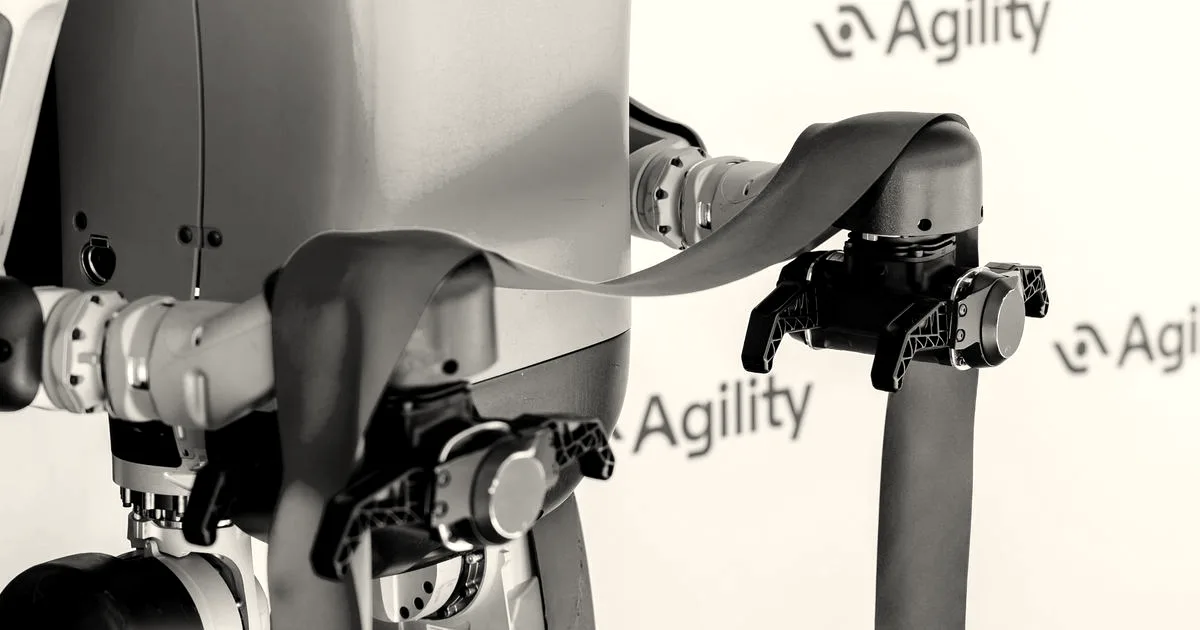
Agility Robotics is opening a 60,000-square-foot facility to train its humanoid robots in Fremont, California, just up the highway from the factory where Tesla is expected to start manufacturing its Optimus robots this year. Tesla has increasingly bet on Optimus, with CEO Elon Musk recently saying he expects it to become the biggest product ever once it’s useful outside Tesla sometime next year.
Agility doesn’t have Tesla’s capital, but its robot, Digit, already generates revenue in the real world, carrying totes and bins in manufacturing and warehouse settings for customers including Amazon, GXO, Schaeffler, and Toyota Motor Manufacturing Canada. The company says it has secured $300 million in contract orders. Agility hasn’t disclosed how many Digits it has built or deployed, but outside observers estimate that dozens have worked in pilot or revenue-generating deployments; the company says Digits have moved 100,000 totes at one GXO logistics facility.
CEO Peggy Johnson is currently leading Agility through a reverse merger expected to make it the first pure-play humanoid robot company on public markets later this year. Founded in 2015 by a group of researchers who developed techniques that let robots walk safely on two legs, Agility is trying to capitalize on its lead over a newer generation of AI-inspired robotics startups such as Figure, 1X, the Bot Company, and Sunday Robotics. Co-founder and chairman Damion Shelton says the company keeps safety-critical functions out of generative AI’s hands, comparing it to keeping a self-driving car’s anti-lock brakes off AI control: “you don’t want to get creative with your safety stack.” Generative AI’s real value, he says, is helping scale the range of tasks the robot can be programmed to do.
The new Fremont facility is meant to accelerate deployments. Johnson says more than 30 customers are in talks about deploying the six-foot-tall Digit, and the site will let the robot learn new skills in environments similar to those it will face in the field. Unlike many newer entrants to the humanoid space, Agility isn’t planning to offer in-home robots anytime soon, a view that matches most independent robotics experts, who believe today’s robots aren’t yet safe enough for consumer use. Digit currently operates in human-free zones, but the next version, expected to be unveiled this fall, will be able to sense humans and won’t need to be kept apart from them.
Why it matters
Agility’s revenue-generating deployments and its expected public listing make it a real-world test of whether humanoid robots can scale through paying commercial customers before Tesla’s Optimus effort ramps up next door.