Startups & Funding
Baseten reportedly nears $1.5B funding at $13B valuation
Baseten is reportedly close to finalizing a $1.5 billion funding round at a $13 billion valuation, marking a rapid increase in the AI inference startup's worth.
The AI inference startup Baseten is reportedly close to finalizing a $1.5 billion funding round that would value the company at $13 billion, according to a report by the Wall Street Journal.
According to the Wall Street Journal, the transaction is structured as a split-priced round. A split-priced round is a funding tactic where different investors enter at different valuations, which startups sometimes use to boost their headline valuation and make lead investors look good on paper. For this round, some investors are reportedly entering at a $13 billion valuation, while others are coming in at an $11 billion valuation.
The funding round is reportedly co-led by the following investment firms:
- Spark Capital
- Sands Capital
- Altimeter Capital
- Wellington Management
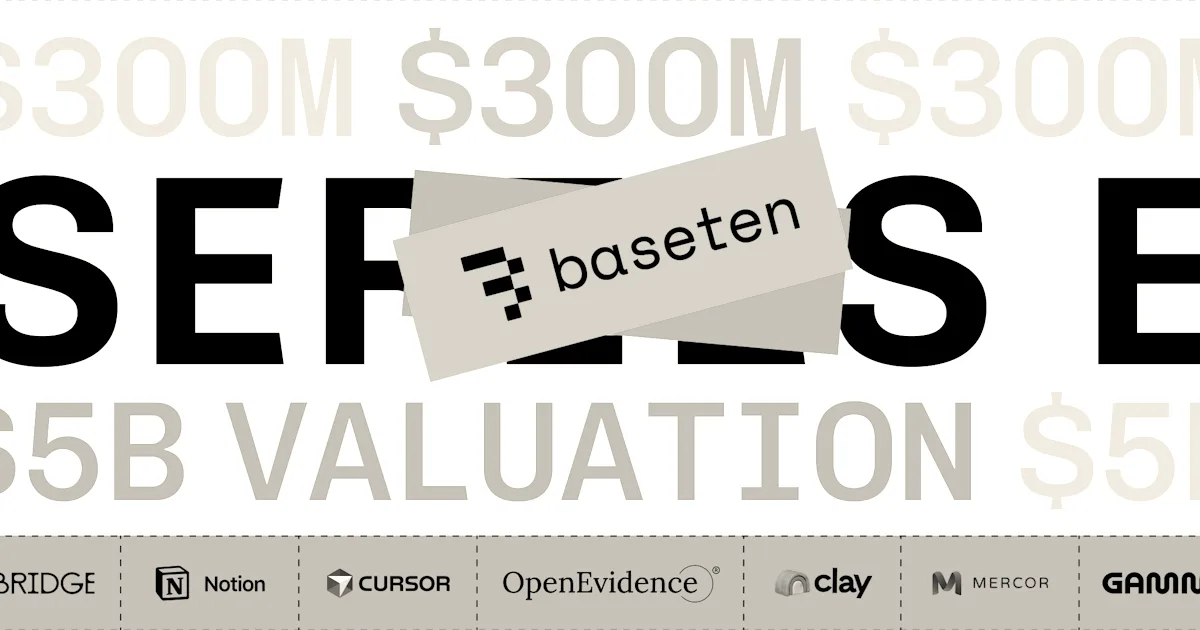
This reported transaction follows a succession of capital raises for Baseten. Just five months ago, the startup announced a $300 million Series E funding round at a $5 billion valuation. If finalized, the new $13 billion valuation would represent a 160% increase in the company’s valuation in less than half a year. The Series E round itself was announced nine months after Baseten raised a $150 million Series D funding round.
Launched in 2019, Baseten is benefiting from what the publication The Next Wave termed the “inference gold rush,” as investors pour capital into the inference layer of artificial intelligence. The inference layer refers to the part of AI model operation that occurs after a user submits a prompt. Within this space, Baseten promises to handle inference quickly while controlling costs. The company achieves this by routing requests to the best-for-task model, especially to competent, less-expensive open source alternatives.
Why it matters
If finalized, this round represents a 160% valuation increase in less than six months. This rapid appreciation underscores the intense investor interest and capital flowing into the AI inference layer.