Startups & Funding
Arinna secures $4M seed round for ultrathin space solar panels
Arinna raised a $4 million seed round to develop ultrathin solar panels, which the company expects to test in orbit before the end of this year.
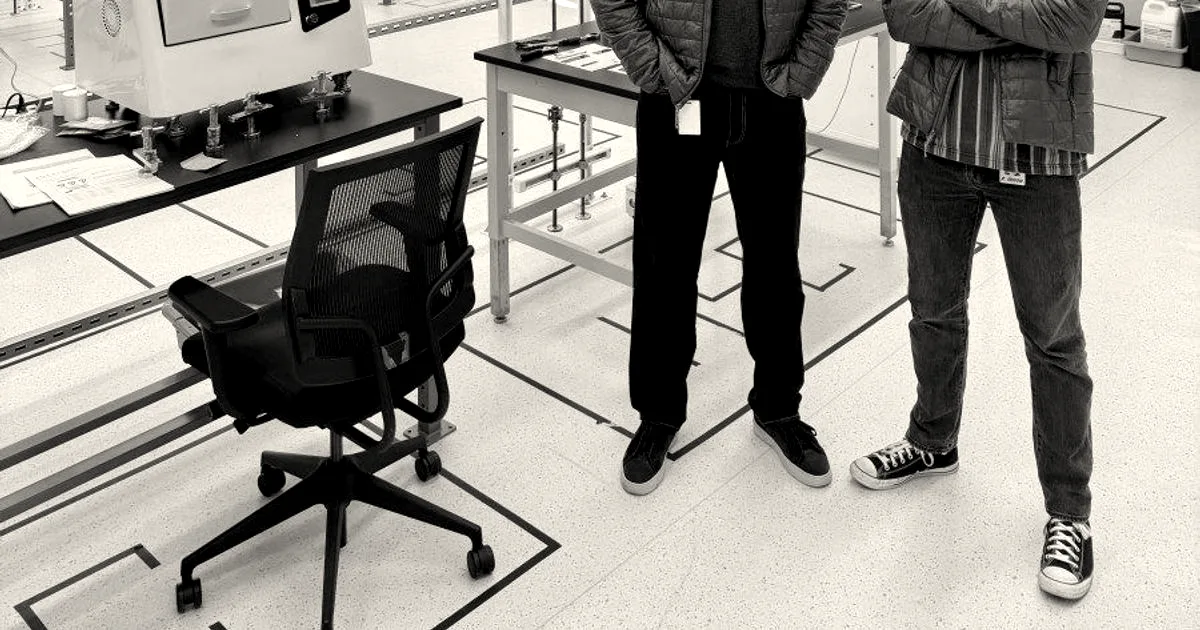
Arinna, a startup founded by CEO Koosha Nazif and CTO Alex Shearer, announced on Wednesday that it has raised a $4 million seed round. The co-founders met while pursuing their doctoral research at Stanford, where Nazif focused on materials for photovoltaic cells and Shearer developed scaling techniques. Shearer described their partnership by noting that Nazif acted as the architect of the technology, while Shearer focused on construction.
The investment round was led by Spacecadet Ventures, a venture capital firm. Other participants in the round include:
- Anorak Ventures
- Breakthrough Energy Foundation
The company declined to share its valuation.
The startup’s technology relies on transition metal dichalcogenides (TMDs), which are atomically thin semiconductor materials. Arinna claims its photovoltaics will be 32% more efficient and more durable than traditional panels, and cheaper than legacy space solar panels. According to Shearer, the technology will last 15 years on orbit without requiring protective coverings. Ben Gaddy, a materials scientist and senior director at Breakthrough Energy, told TechCrunch that while historical solar development has focused on minor percentage improvements to existing technologies, Arinna’s approach uses a new category of technology. Gaddy stated, “This is a totally different class of materials.”
Modern mass-manufactured satellites often use cheaper silicon panels that degrade quickly due to cosmic radiation. Investors see Arinna’s technology as a way to resolve these power constraints. Wiz Khuzai, a general partner at Spacecadet Ventures, told TechCrunch that power is a consistent bottleneck for space companies, and stated that Arinna will serve as the unlock for future space power requirements.
Arinna expects to have its first products tested on orbit before the end of this year. Shearer stated that the company is currently building qualification panels for its initial customers to demonstrate their efficiency and durability in space. Over the next year, the startup plans to refine its manufacturing processes to produce these cells in a roll-to-roll fashion—a manufacturing process for flexible electronics. Looking further ahead, Arinna hopes to build a facility to mass-produce the technology at a megawatt scale in 2028.
Why it matters
Arinna is developing ultrathin solar panels using transition metal dichalcogenides to address the power limitations of mass-manufactured satellites, which currently rely on silicon panels that degrade quickly due to cosmic radiation.