Chips & Hardware
Neurable pivots to licensing its non-invasive BCI technology
Neurable is looking to license its non-invasive brain-computer interface technology to consumer wearable manufacturers, following a $35 million Series A funding round.
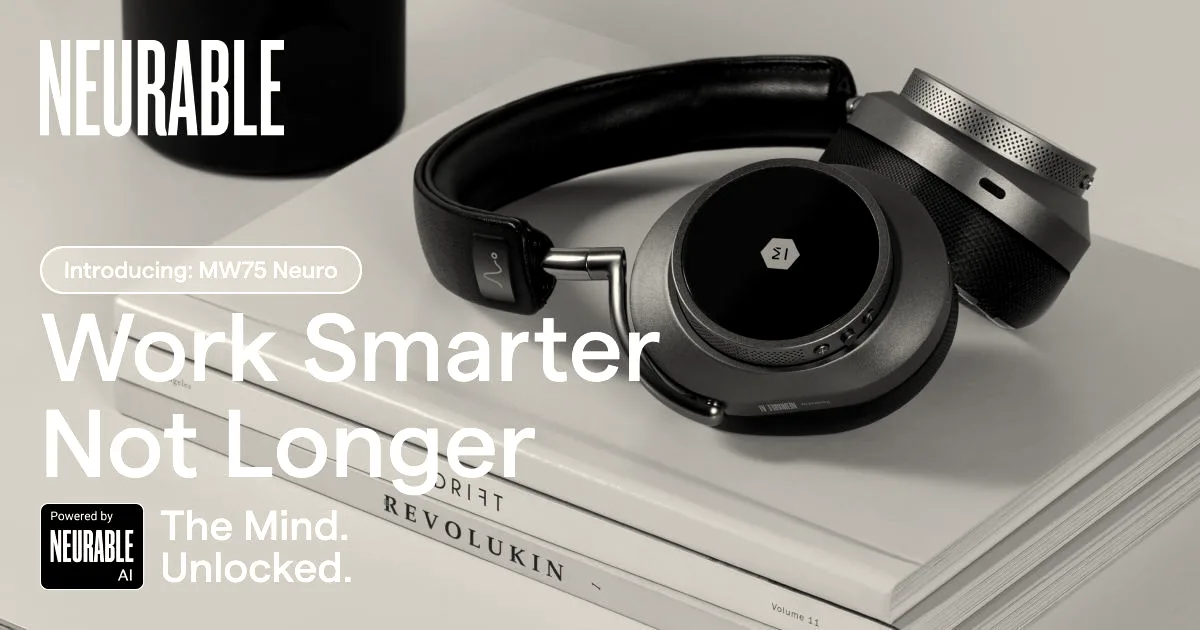
The brain-computer interface (BCI) startup Neurable is looking to license its brain-sensing technology to consumer hardware manufacturers. This shift in business model follows a $35 million Series A funding round that the company raised in December to scale the commercialization of its technology. Neurable characterizes its technology as “non-invasive,” distinguishing itself from competitors like Neuralink, which is known for “inserting computer chips directly into people’s skulls.” Instead of requiring surgical procedures, Neurable’s technology works through a combination of electroencephalography (EEG) sensors and signal processing to scan and analyze brain activity with artificial intelligence, providing information about a user’s cognitive performance.
To demonstrate the commercial viability of its platform, Neurable has established partnerships with several companies. These include HP Inc. and its gaming brand HyperX, with which Neurable developed a headset designed to optimize focus and performance for gamers. The startup has also partnered with iMotions, a software platform specializing in human behavior research, to assist with research initiatives. On Tuesday, Neurable announced its licensing platform, which allows original equipment manufacturers (OEMs) to directly integrate its AI-powered brain-sensing technology into existing hardware—such as headphones, hats, glasses, and headbands—while maintaining full control over product design, user experience, and distribution. According to Neurable CEO Ramses Alcaide, the startup is now focused on scaling its technology to make it as ubiquitous as heart rate sensors.
Because brain data is highly personal, Neurable has implemented specific privacy protections to safeguard user information. Alcaide stated that the company follows Health Insurance Portability and Accountability Act (HIPAA) standards—the US health data privacy standard—to protect, encrypt, and anonymize user data. “We make sure we follow HIPAA standards, like we’ve gone above and beyond where a lot of startups would be at our stage to make sure that we protect the data, we encrypt it, and that we anonymize it,” Alcaide said. Regarding artificial intelligence, Alcaide noted that Neurable only uses neural data to train its software with explicit user consent, applying it to targeted experiments rather than collecting and training on the data without restriction.
Why it matters
Neurable is shifting its business model to license its non-invasive BCI technology to consumer-facing companies, aiming to integrate brain-sensing capabilities into everyday hardware like headphones and glasses. This strategy could bypass the surgical requirements of invasive alternatives, potentially accelerating the adoption of neural monitoring in daily life.