Policy & Regulation
TerraPower wins NRC approval for Wyoming nuclear reactor
TerraPower received NRC approval to build a 345-megawatt nuclear reactor in Wyoming, marking the first such permit issued by the regulator in nearly a decade.
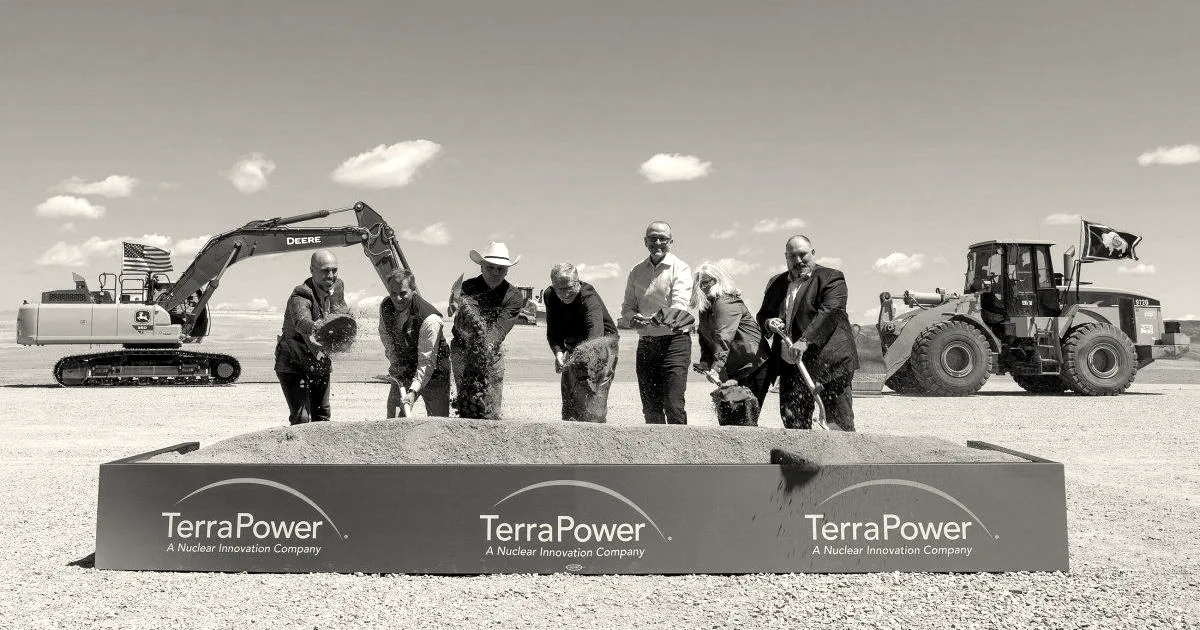
The Nuclear Regulatory Commission (the US agency responsible for nuclear safety) has granted TerraPower a permit to construct a nuclear reactor in Wyoming. The approval marks the first time the regulator has issued such a permit in nearly a decade. The reactor will be built near an aging coal power plant, following a permitting process that allows construction on private property.
The facility will house the Natrium reactor, a 345-megawatt design developed by TerraPower in partnership with GE Vernova Hitachi. At 345 megawatts, the reactor is about two-thirds smaller than modern full-size reactors. The design departs from the water-cooled systems that have dominated the industry for the last 50 years. Instead, the Natrium reactor is cooled by molten sodium, which TerraPower states should be safer than water-cooled reactors. This marks the first time in over 40 years that the regulator has approved a commercial reactor that is not cooled by regular water. The system will operate with an excess of molten sodium stored in insulated tanks, allowing the reactor to continue splitting atoms when demand is low. Storing this excess energy as heat in the molten sodium should help lower generating costs.
TerraPower, which was founded by Bill Gates in 2015 and is backed by Nvidia, is part of a wave of nuclear startups backed by tech companies. The company is one of nearly half a dozen nuclear startups supported by tech companies or their founders. According to PitchBook, investors have recently funded nuclear startups with well over $1 billion in capital. TerraPower itself has raised a total of $1.7 billion, which includes a $650 million funding round that closed in June.
Despite securing the permit, the project faces economic challenges. Nuclear power faces an uphill battle, as it has been one of the most expensive forms of new generating capacity. This is due to cost overruns at power plants, as well as strides that wind, solar, and batteries have made in bringing costs down. While nuclear startups hope to leverage mass manufacturing to lower capital expenditures, this theory has yet to be proven, and it often takes at least a decade for manufacturing savings to materialize.
Why it matters
The regulator’s approval is a critical milestone for non-water-cooled reactor designs, signaling a potential shift in how nuclear power is permitted and deployed.