Policy & Regulation
Blue Origin’s New Glenn launch ends in orbit failure
Blue Origin’s third New Glenn launch failed to place a customer satellite into the correct orbit, triggering an FAA investigation into the company’s first major mission setback.
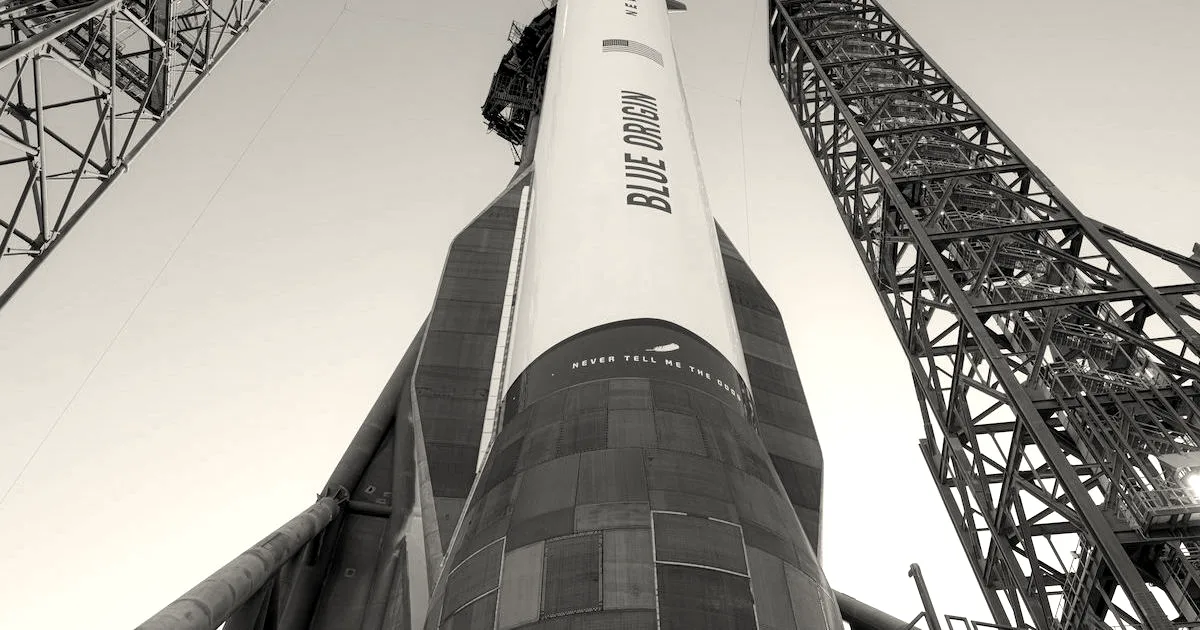
On Sunday, Jeff Bezos’ space company Blue Origin conducted the third launch of its New Glenn rocket, lifting off at 7:35 a.m. from Cape Canaveral, Florida. While the company successfully recovered the rocket’s booster, it failed at its primary mission: delivering a communications satellite to orbit for its customer, AST SpaceMobile. Roughly two hours after the launch, Blue Origin announced that the rocket’s upper stage had placed the BlueBird 7 satellite into an off-nominal orbit. AST SpaceMobile later reported that the satellite was left in an orbit that was lower than planned, leaving the payload at an altitude too low to sustain operations. As a result, the satellite must now be de-orbited to burn up in the atmosphere of Earth. The loss of the satellite is covered by AST SpaceMobile’s insurance, and the company expects to launch 45 more satellites by the end of 2026.
Blue Origin CEO Dave Limp attributed the orbital delivery failure to the rocket’s upper stage, stating that one of its engines did not produce sufficient thrust to reach the target orbit. The booster itself was successfully recovered on a drone ship roughly 10 minutes after liftoff, marking the first time Blue Origin re-used a previously flown New Glenn booster. However, Limp acknowledged the gravity of the upper-stage malfunction. “While we are pleased with the nominal booster recovery, we clearly didn’t deliver the mission our customer wanted, and our team expects,” Limp said. He added that the company would do everything possible to address the issue.
The Federal Aviation Administration (the US aviation regulator) has ordered Blue Origin to investigate the failure. This incident marks the first major failure for the New Glenn program, which made its first flight in January 2025 and previously launched a NASA mission to Mars. The setback could have wider implications for Blue Origin’s commercial and government ambitions. The company is positioning itself to serve as a primary launch provider for Artemis (NASA’s moon exploration program). Both NASA and the administration of US President Donald Trump have pressured Blue Origin and its competitor, SpaceX, to land spacecraft on the moon before the end of Trump’s second term.
While the failure is a significant hurdle for Blue Origin, such setbacks are common in early rocket development. Competitor SpaceX experienced similar losses during the development of its Falcon 9 rocket, which previously blew up mid-flight in 2015 and exploded on the launch pad during a 2016 test.
Why it matters
The failure of the New Glenn rocket’s second stage represents the first major setback for Blue Origin’s program and has triggered an FAA investigation, potentially complicating the company’s ambitions to serve as a primary launch provider for NASA’s Artemis missions.