Apps & Consumer
Canva updates AI assistant to handle complex design workflows
Canva is launching a research preview of its AI assistant to execute multi-tool design workflows, as the company eyes a likely IPO next year.
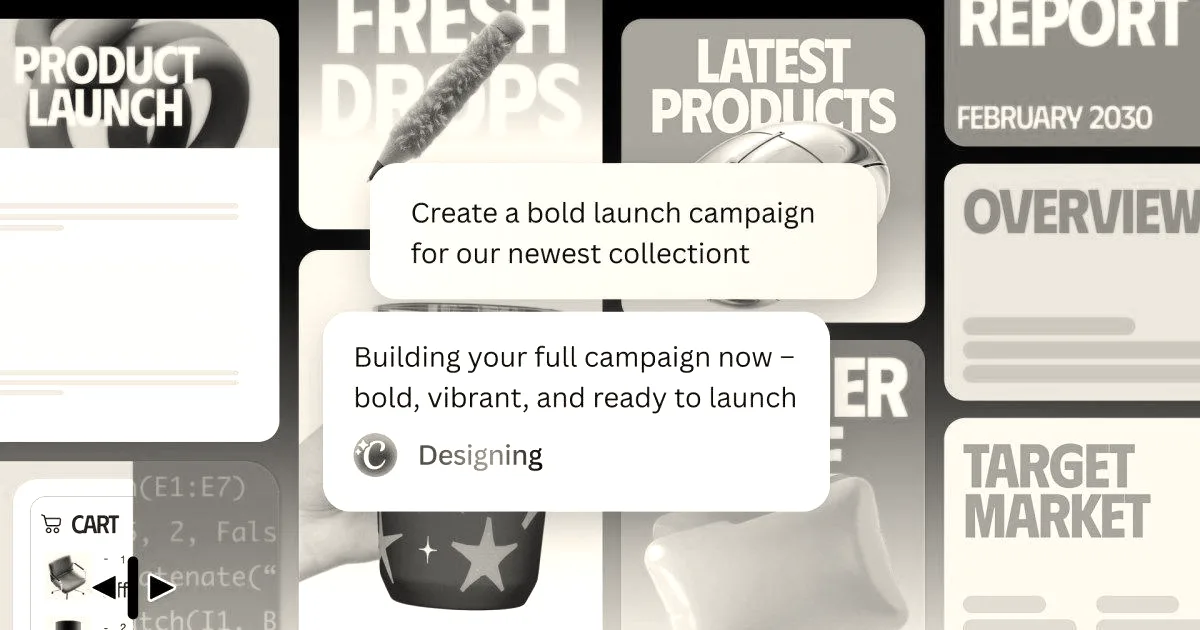
This week, design platform Canva released a research preview—which the company defines as an early access release for testing purposes—of its updated AI assistant. The update allows users to describe complex design tasks that the assistant then executes by calling various internal tools. The assistant uses layers to generate designs, giving users the flexibility to manually adjust different aspects of the final product. This release comes as Canva focuses on making its AI assistant central to user workflows by adding features like image and website generation.
Alongside the assistant, Canva introduced efficiency improvements to its underlying models. According to the company, the performance metrics for its updated models include:
- The Lucid Origin image-generation model is now 5x faster and 30x cheaper.
- The 12V image-to-video model is now 7x faster and 17x cheaper.
The update also adds integrations with external productivity applications, including Slack, Gmail, and Google Drive, allowing the assistant to gather context from emails, files, and conversations.
Canva co-founder and COO Cliff Obrecht highlighted that while users may run autonomous agentic workflows—workflows where AI agents perform tasks autonomously—in other systems, they return to Canva for the final stages of production. Obrecht noted that many small businesses start and end their day executing their workflows entirely within Canva.
“We also work incredibly well with Anthropic, Google, and OpenAI, so if someone is doing their agentic workflows in those products, they can call Canva, get content, and they can get it back into those LLMs. But they always need to end up doing the final mile of editing, collaboration, and deployment. That’s where we really are strong,” Obrecht said.
This positioning comes as competitors also integrate AI capabilities. Last month, Figma integrated support for AI agents, while Adobe recently launched a similar AI assistant. Despite the competition, Obrecht reported that Canva’s enterprise business is growing 100% year-on-year.
The growth supports Canva’s broader financial trajectory. The company is currently valued at $42 billion, according to PitchBook. Obrecht stated that Canva will likely go public next year.
Why it matters
By transforming its assistant into a hub capable of coordinating multiple tools, Canva aims to secure its role as the primary execution layer for design. This strategy positions the platform as the essential final step for content creation, even as enterprises adopt autonomous AI workflows across other major platforms.