Startups & Funding
Cauldron Ferm raises $13.25 million for continuous fermentation
Cauldron Ferm raised $13.25 million in a Series A2 round to scale its continuous fermentation technology, which turns microbes into nonstop production assembly lines.
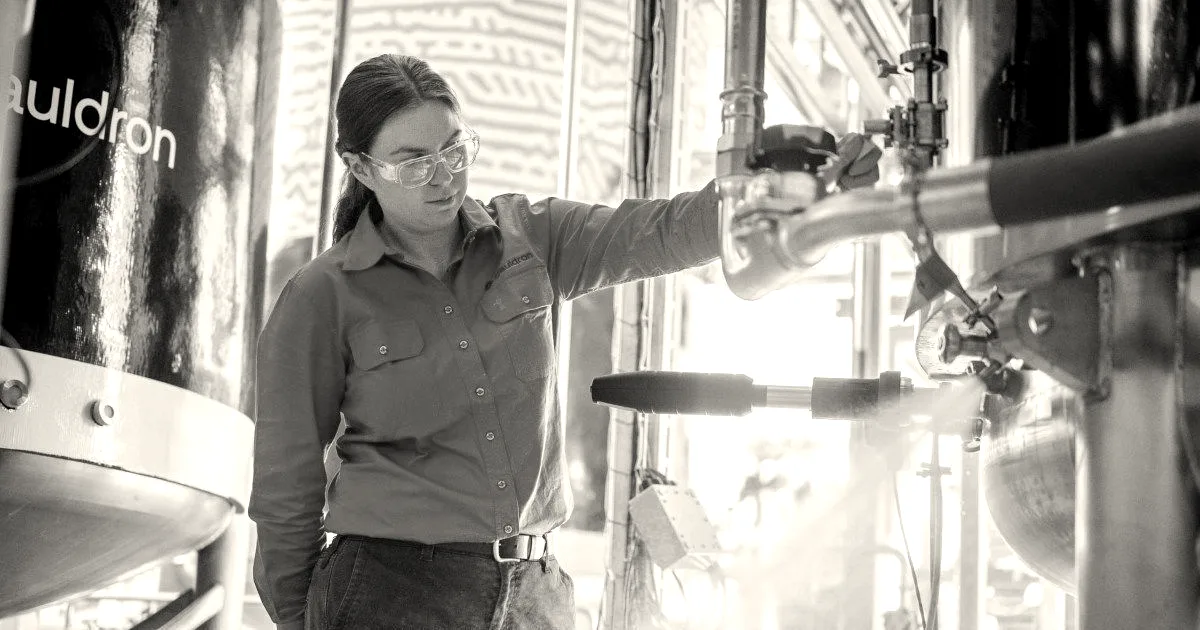
Cauldron Ferm has secured $13.25 million in a Series A2 funding round. The round was led by Main Sequence Ventures, with participation from:
- Horizons Ventures
- NGS Super
- SOSV
The company previously raised $6.5 million in 2024.
The company’s core technology has an unlikely history, tracing its origins back to the 1960s or maybe the 1970s. Founders David MacLennan and Polly MacLennan spent years working on the process. Traditional fermentation typically occurs in batches, where ingredients are added and microbes work until the process is stopped to extract the finished product. While this batch method works for high-premium products like alcohol, food production requires a lower-cost alternative. Over the course of 40 years, the MacLennans refined their approach to continuous fermentation—defined as an uninterrupted production process that turns microbes into assembly lines.
Michele Stansfield, who joined the company in 2012 and is now co-founder and CEO, later realized the potential of the technology. Stansfield admitted they did not initially realize what they had, noting that they did not understand the challenge of continuous fermentation for synthetic biology—which refers to the redesign of organisms for useful purposes. She subsequently raised a seed round to acquire the company’s intellectual property, physical, and business assets.
Cauldron Ferm’s technology, which it calls “hyper fermentation,” is designed to keep microbes in their maximally productive state. The process can run in existing batch fermenters with minor modifications to the facilities. Under this model, Cauldron Ferm’s customers bring their own microbes and strains, and the startup works to tweak their growing conditions, including nutrients, to keep them active. Currently, the company is focused on producing fats and proteins, such as whey protein, which Stansfield described as a product that can easily integrate into existing supply chains.
With the new Series A2 funding, Cauldron Ferm plans to use the capital to increase its technology moat, according to Stansfield. The company is looking to expand beyond its initial focus on food. Stansfield, the co-founder and CEO of Cauldron Ferm, stated, “Sixty percent of all inputs to global economy can be produced from biology,” adding that while food was the company’s starting point, it is now beginning to diversify.
Why it matters
The transition from batch to continuous fermentation is a necessary step for synthetic biology to scale from niche food products into broader industrial supply chains.