Startups & Funding
Wayve raises $60 million from chipmakers to scale self-driving tech
Wayve raised $60 million from AMD, Arm, and Qualcomm to expand its self-driving software, adding to its $1.2 billion Series D round.
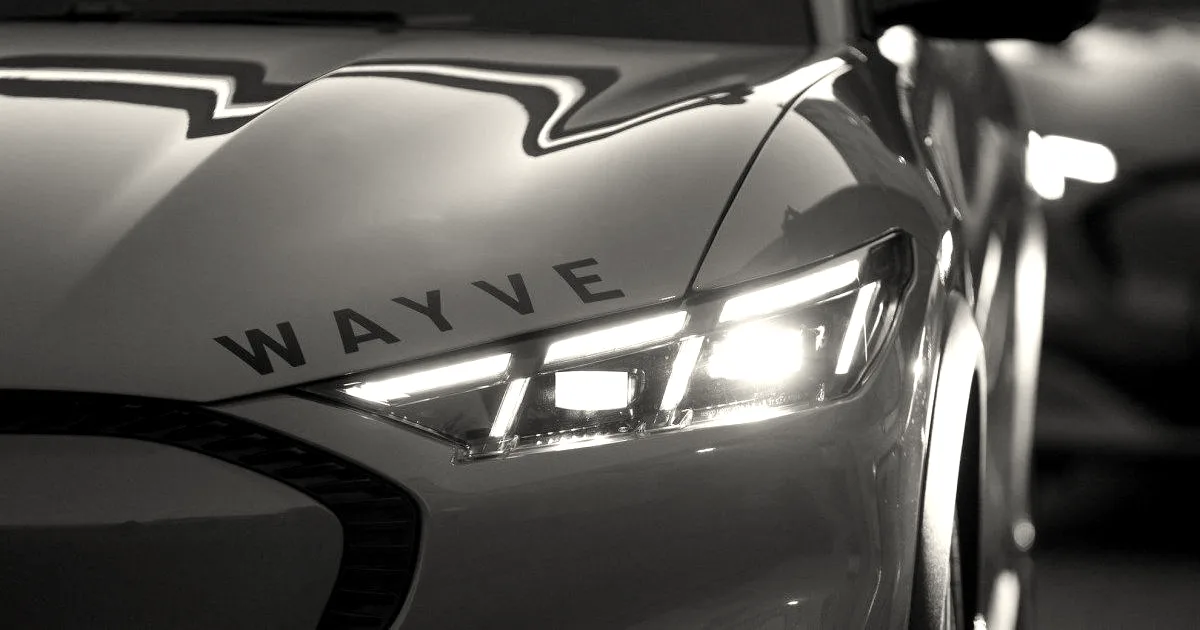
U.K. self-driving technology startup Wayve has secured $60 million in a funding extension from semiconductor companies AMD, Arm, and Qualcomm. The investment builds on the startup’s recent $1.2 billion Series D round, which is a late-stage venture round. The companies announced the investment on Wednesday. The funding round could grow again, reflecting industry interest in Wayve’s hardware-agnostic approach to autonomous driving.
The involvement of these chipmakers is strategic, focusing on Wayve’s ability to run its software on existing hardware. Wayve’s software can run on whatever chip its OEM (original equipment manufacturer) partners already have in their vehicles, rather than requiring specific chips. The startup’s system uses an end-to-end neural network that relies only on data captured from whatever sensors are on the vehicle to direct and teach it how to drive. This software underpins two products: an “eyes on” assisted-driving system requiring driver attention, and an “eyes off” fully automated-driving system for robotaxis or consumer vehicles.
Wayve has attracted a broad group of strategic and returning investors. These backers include:
- Chipmakers: AMD, Arm, and Qualcomm.
- Automakers: Mercedes-Benz, Nissan, and Stellantis.
- Technology and ride-hailing firms: Microsoft, Nvidia, and Uber.
- Earlier venture backers: Eclipse, Balderton, and SoftBank Vision Fund 2.
Among these, Uber has committed another $300 million in a milestone-based investment. This commitment is contingent on deploying robotaxis—autonomous vehicles operating as taxis—outfitted with Wayve’s technology in London.
The startup has already secured several automaker customers. Nissan will integrate Wayve’s technology into the advanced driver-assistance system (ADAS) in its cars starting in 2027. Mercedes-Benz and Stellantis are also customers that plan to use Wayve’s technology in future models. The new investment will support integration across automotive compute platforms and the continued deployment of the Wayve AI Driver in production systems.
To scale embodied AI—AI systems that interact with the physical world—co-founder and CEO Alex Kendall emphasized the need for hardware flexibility. “For embodied AI to scale, automakers need design choice and supply chain flexibility. Expanding our relationships with leading silicon companies helps bring that into production at a global scale,” Kendall said.
Why it matters
This funding is less about capital and more about compute platform flexibility. By aligning with major chipmakers, Wayve is positioning its software to be hardware-agnostic, which is a critical requirement for automakers looking to integrate self-driving technology without being locked into a single silicon provider.