Chips & Hardware
Clawdmeter brings Claude Code usage stats to a physical dashboard
The open-source Clawdmeter device allows developers to track their Claude Code usage statistics on a dedicated hardware display, tapping into the growing 'tokenmaxxing' trend.
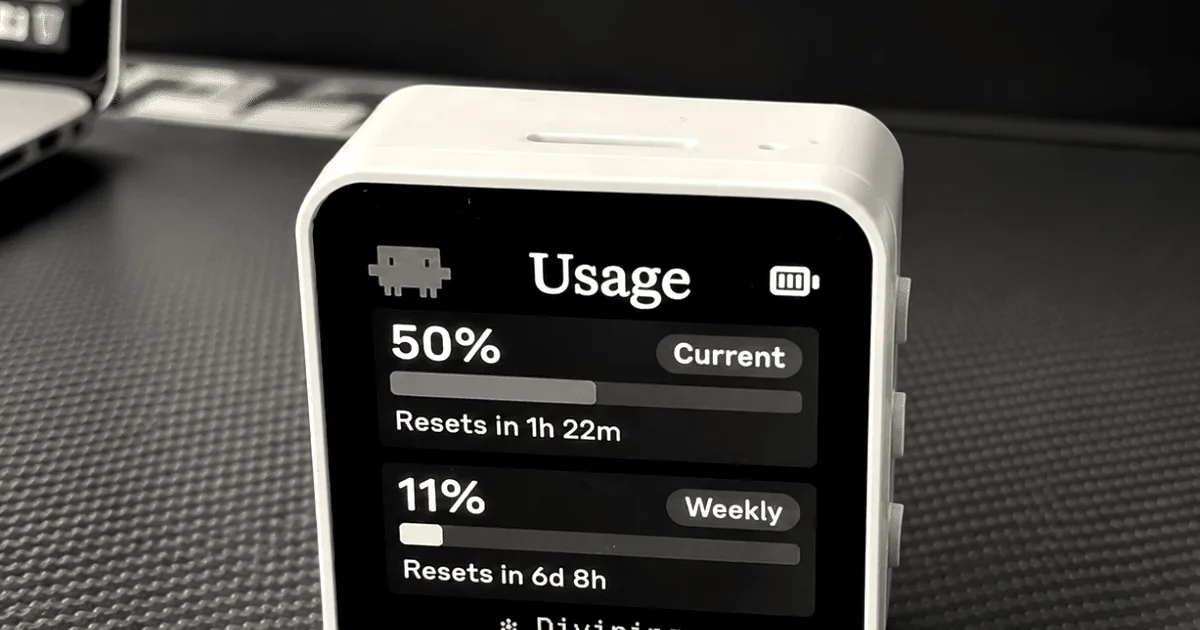
A new open-source hardware project is bringing software usage metrics onto a hardware display. The Clawdmeter is an open-source hardware device that displays Claude Code usage statistics. The project was created by Reykjavik-based software developer Hermann Haraldsson. To track how much a user interacts with Anthropic’s AI tool, the device reads the user’s Claude Code OAuth token—an authentication credential used to access API data—to make API calls. This allows the device to pull usage numbers directly and display them, offering a dedicated desktop dashboard for AI power users.
The device is built using the Waveshare ESP32-S3-Touch-AMOLED-2.16, a hardware component that features a 2.16-inch display. This project aligns with the ‘tokenmaxxing’ trend emerging from Silicon Valley and the wider tech community. Tokenmaxxing is defined as a trend where software engineers maximize AI token consumption as a measure of AI adoption. By displaying statistics on a dedicated screen, the Clawdmeter provides a hardware-based representation of developer activity, turning abstract API consumption into a visible desktop metric.
The project has gained traction on GitHub since its launch on May 10. Specifically, over 800 people have starred it on GitHub, and 50 have already forked the project. The community reception has been positive, with one Reddit user joking that Anthropic should mail these to users for free. Haraldsson, who is not an embedded developer—a developer specializing in embedded systems and hardware—explained that he had always wanted to work with embedded devices. He noted that using Claude to guide him through the development process in just a few days demonstrated how AI has democratized programming, allowing anyone to build what only specialized developers once could. Haraldsson also mentioned that watching the device update during work creates an engaging feedback loop. Ultimately, he believes the device appeals to users due to its physical form factor. According to Haraldsson, a software developer, “There’s a kind of nostalgia for when you used to have a hardware device for everything — like a Walkman to play music, or an iPod.”
Why it matters
The Clawdmeter project illustrates the ‘tokenmaxxing’ trend among developers, where AI token consumption becomes a metric of adoption, while also highlighting how accessible hardware development has become for non-embedded engineers.