Chips & Hardware
XDOF raises $70 million to build robotics training data infrastructure
XDOF has raised $70 million to build data pipelines and collection tools for robotics, aiming to solve the industry's critical shortage of physical interaction training data.
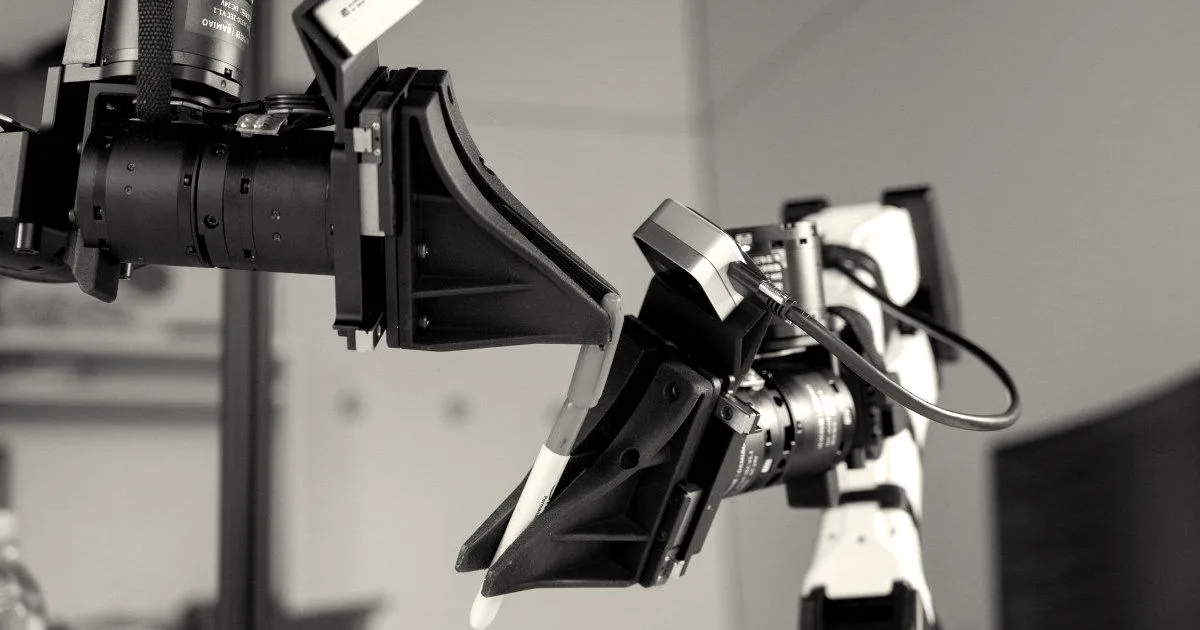
XDOF has emerged from stealth with $70 million in funding to address the data feedback loop needed to teach robots how to interact with the physical world. The startup’s launch comes as major labs race to teach machines to operate in the physical world, years after OpenAI shuttered its robotics program in 2021. XDOF, which has about 60 employees, is already working with 20 customers, including several frontier AI labs. The funding round was raised from investors including Thrive Capital, Spark Capital, a16z, Lux, and WndrCo. XDOF is betting that this data feedback loop is the next great bottleneck in artificial intelligence, rather than models or chips.
The company was launched in October 2024 by co-founders Philipp Wu (CEO), Fred Shentu (CTO), and Nemo Jin (COO). Wu and Shentu previously ran into data scarcity as researchers at UC Berkeley. “There was this chicken-and-egg problem — we first needed to actually collect data before we could even ask how to train a foundation model for robotics,” Wu said. To address this, they developed GELLO, a low-cost teleoperation system—where a human operator controls a robotic arm—to generate training data. Wu noted that top labs are pursuing robotics, warning that falling behind in physical AI could mirror the downfalls of lagging in the language model race.
As a starting point, XDOF is partnering with UC Berkeley to release the “ABC” dataset, which provides robot training data. The dataset includes:
- 130,000 trajectories of robot manipulation data
- 300 hours of simulation
- 100 hours of evaluations
To expand its data collection, XDOF plans to build its own wearable sensors for egocentric data—which is data gathered by humans performing everyday tasks. The company also plans to hire and train armies of teleoperators and egocentric data operators around the world. Wu explained that maintaining hundreds of robots in warehouses of hundreds of thousands of square feet is an operational challenge that major labs would rather outsource. The startup’s name, XDOF, refers to “degrees of freedom”—the number of independent motions a robot can perform. While a human arm has seven degrees of freedom, Figure AI’s latest robot has 30, and XDOF aims to support arbitrary configurations.
Why it matters
Robotics development is currently stalled by a lack of high-quality physical interaction data. XDOF is positioning itself as the essential infrastructure layer for labs that cannot build these massive, labor-intensive data pipelines in-house.