Apps & Consumer
Deezer opens its AI-detection tool to rival streaming platforms
Deezer is making its AI-detection tool available to other streaming platforms to combat fraudulent streams and ensure fair compensation for human artists.
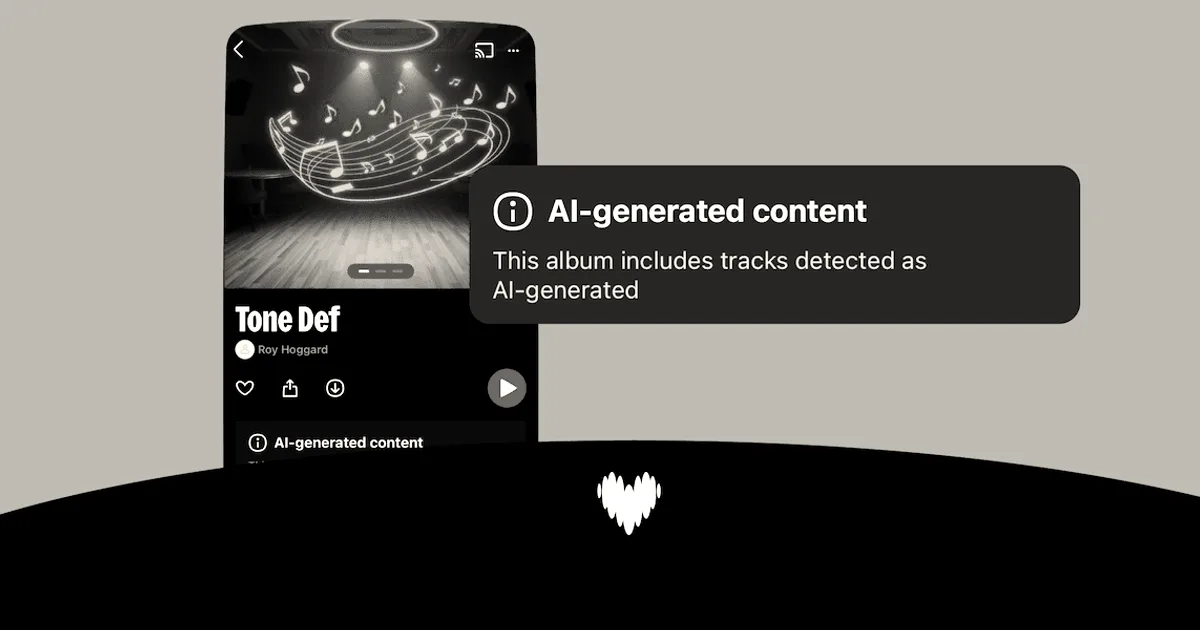
On Thursday, music streaming platform Deezer announced that it is making its AI-detection tool available to other streaming platforms. The tool is designed to combat fraudulent streams and AI-generated music, promoting transparency and ensuring fair compensation for human artists. Deezer claims the tool can identify every AI-generated track from major generative models like Suno and Udio. A company spokesperson told TechCrunch that the tool operates with an accuracy of 99.8%.
The scale of AI-generated content on streaming platforms has grown significantly. Deezer released several statistics highlighting the volume of these uploads:
- The platform now receives 60,000 AI tracks per day.
- It has detected a total of 13.4 million AI-generated songs.
- Fully AI-generated music made up 18% of daily uploads in June of last year, surpassing 20,000 tracks.
- Deezer reports that 85% of streams from fully AI-generated tracks are deemed fraudulent.
Deezer’s tool demonetizes these AI-generated tracks and excludes them from the royalty pool. Deezer CEO Alexis Lanternier stated that there has been significant interest in the tool, and noted that several companies have “already performed successful tests.” One such organization is Sacem (the French management company representing music creators), which represents 300,000 music creators and publishers, including David Guetta and DJ Snake.
The commercial release of the tool comes amid growing industry concern over streaming manipulation. In 2024, a North Carolina musician was charged by the Department of Justice (DOJ) with creating AI-generated songs and using bots to stream them billions of times, resulting in more than $10 million in stolen streaming royalties. Platforms have responded in different ways: Bandcamp banned AI-generated music entirely, while Spotify updated its policy to address the rise of AI tracks. Meanwhile, record labels like Universal Music Group and Warner Music Group have licensed their catalogs to AI startups Suno and Udio to ensure artists and songwriters are compensated. In 2024, Deezer became the first music streaming platform to sign the global statement on AI training, joining creatives such as Kate McKinnon, Kevin Bacon, Kit Harington, and Rosie O’Donnell.
Why it matters
Deezer’s move to commercialize its detection tool signals a shift toward industry-wide standardization in policing AI-generated content, aiming to protect royalty pools for human creators.