Chips & Hardware
DoorDash launches DoorDash Air, its own drone delivery business
DoorDash is building its own drone delivery business, DoorDash Air, after receiving a Part 135 air carrier certification from the U.S. Federal Aviation Administration that lets it legally operate a commercial drone delivery service in the United States.
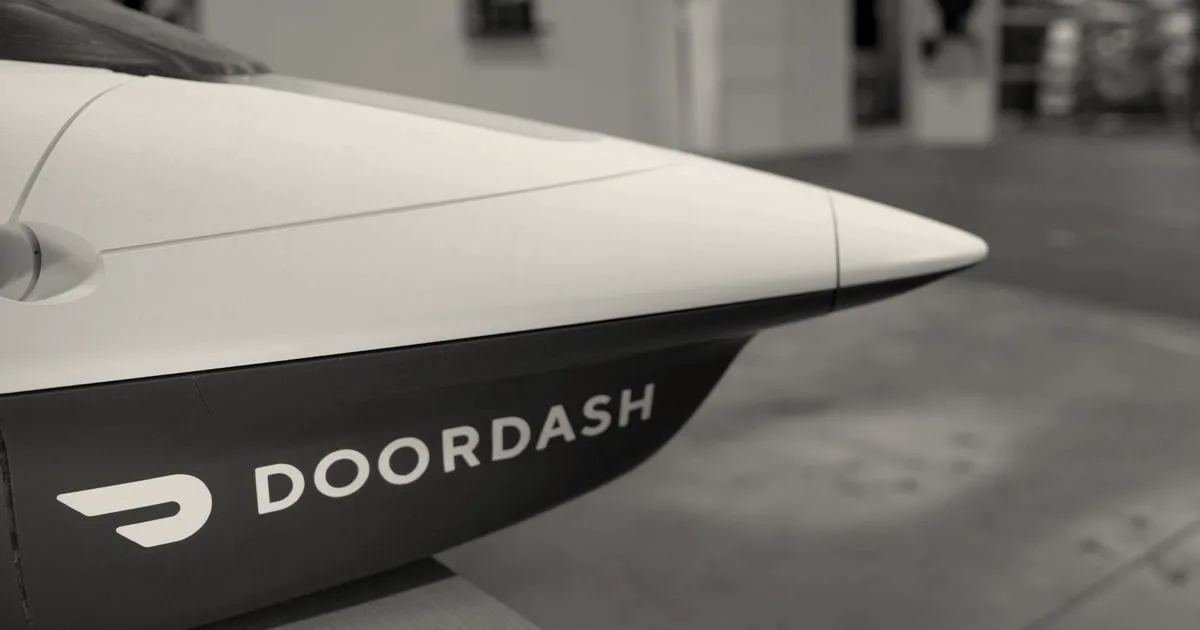
DoorDash unveiled DoorDash Air, an effort developed within its robotics and autonomy team that will eventually operate inside the company’s delivery app. The certification does not mean DoorDash’s custom-built drones will be delivering food tomorrow, or even next month: the company gave no detailed timeline for when its aircraft will enter operation, and any rollout will likely begin with limited pilot programs in which the unmanned aircraft fly short distances while staying within an operator’s line of sight.
Flying autonomously over longer distances will require a separate FAA approval for Beyond Visual Line of Sight (BVLOS) technology, a certification that Amazon, Wing, and Zipline have each obtained in recent years. Even as it builds its own aircraft, DoorDash is keeping its existing drone partnerships intact: it began working with Alphabet’s Wing in 2022 on a delivery program in Australia, later expanding that partnership to U.S. cities including Dallas-Fort Worth in 2024, and it continues to work with Flytrex as well.
DoorDash Air was developed inside DoorDash Labs, the R&D team that also built Dot, the autonomous sidewalk delivery bot the company introduced in September 2025. Dot now operates in the Phoenix suburbs of Tempe, Mesa, Gilbert, and Chandler, as well as in Fremont, California. Co-founder and chief product officer Stanley Tang framed the drone and sidewalk-bot efforts as extensions of the same delivery network rather than a detour from DoorDash’s core app. “We didn’t start with the question, ‘What’s the coolest autonomous tech we could make?’ We started from first principles: What’s the actual customer problem that needs to be solved?” Tang wrote in a blog post announcing the business.
Tang argued that the physical hardware — a 350-pound sidewalk bot, in Dot’s case, or a drone — matters, but that the software deciding which mode handles a given delivery is just as critical; DoorDash Labs has already built that coordination layer, called the Autonomous Delivery Platform, which currently works with Dot and human drivers and will soon add drones. Tang described the company as tackling the full stack of challenges at once — hardware, embedded systems, and routing algorithms — and used that breadth as a pitch to engineering recruits, contrasting DoorDash with autonomy companies that each specialize in a single layer of the problem.
Why it matters
DoorDash is betting that owning the full delivery stack — aircraft, sidewalk robots, and the routing software dispatching between them — gives it an edge that single-layer autonomy specialists can’t match.