Chips & Hardware
Ford targets $30,000 price point for new electric truck
Ford is promising to deliver a $30,000 electric truck next year using a new universal platform and efficiency-focused manufacturing following recent financial losses.
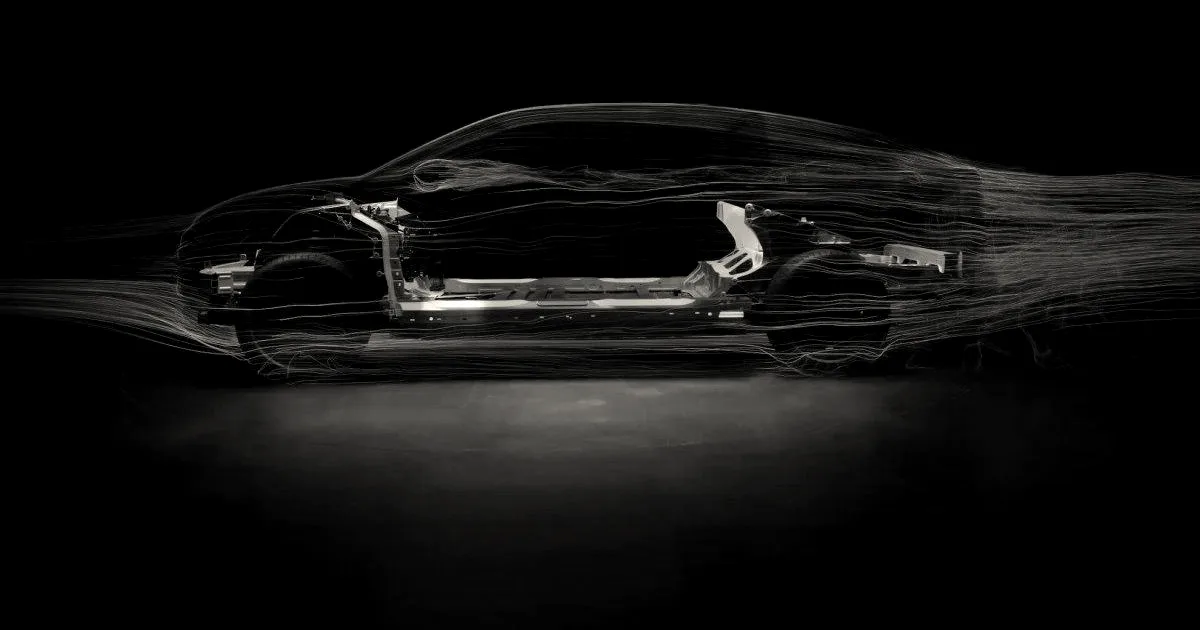
On Tuesday, Ford shared details on its plans to deliver an electric truck next year starting at $30,000. The promise comes after the company took a $19.5 billion financial hit in December and ended production of its battery-electric F-150 Lightning.
To build the vehicle, Ford is investing $2 billion in its Louisville factory. The investment will support a new production system built on a Universal EV platform (UEV). This platform will use single-piece aluminum unicastings—large components cast as one piece to eliminate parts and speed up assembly—and lithium iron phosphate batteries featuring technology licensed from CATL. According to Alan Clarke, who leads the project, the UEV platform could also support a sedan, crossover, three-row SUV, and small commercial vans.
The development is led by Clarke, a former Tesla employee who heads a skunkworks team of about 450 people at a base in Long Beach, California, and 200 people in Palo Alto. The team, which draws talent from Apple, Lucid Motors, Rivian, and Tesla, as well as Auto Motive Power (a startup Ford acquired in 2023), used a bounty program to drive efficiency. Under this program, engineers balanced part costs against vehicle weight and aerodynamic drag. For example, the truck’s base trim will feature a power-folding mirror because it reduces aerodynamic drag, with Ford saving costs by using a single motor instead of two to adjust and fold the mirror.
“We’ve been very focused on making sure that the cost that we’re moving from the product doesn’t remove value,” said Clarke, leader of the skunkworks team. Ford claims the resulting truck will be 15% more aerodynamically efficient than any pickup truck currently on the market.
To lower costs and weight, the team focused on the battery, which typically accounts for about 40% of a vehicle’s expense. By reducing vehicle mass, Ford claims the truck will achieve about 15% more range—an increase of 50 miles—compared to an equivalent gas-powered pickup. The team also adopted a zonal architecture similar to Tesla and Rivian, replacing scattered electronic control units (ECUs), or vehicle computers, with a centralized system. Key efficiency metrics include:
- Module integration: Integrating multiple vehicle functions into five main modules to manage power distribution, battery management, and home power backup.
- Wire harness reduction: Shortening the wire harness by 4,000 feet and reducing its weight by 22 pounds compared to Ford’s first-generation electric vehicles.
- Power system upgrade: Moving from a traditional 12-volt system to a 48-volt power system for certain vehicle functions.
Why it matters
Ford is attempting to pivot its EV strategy to produce a profitable $30,000 electric truck using a new universal platform and efficiency-focused manufacturing. The shift is critical for the automaker as it seeks to recover from significant financial losses and the cancellation of its previous F-150 Lightning production.