Compute & Cloud
Google's biggest clean power project sits 40 miles from xAI's gas plant
Google's newest, largest-ever solar and battery purchase — a project expected to reach 1.8 gigawatts of solar capacity by 2029 — sits about 40 miles north of an unpermitted natural gas plant that powers Elon Musk's xAI data centers.
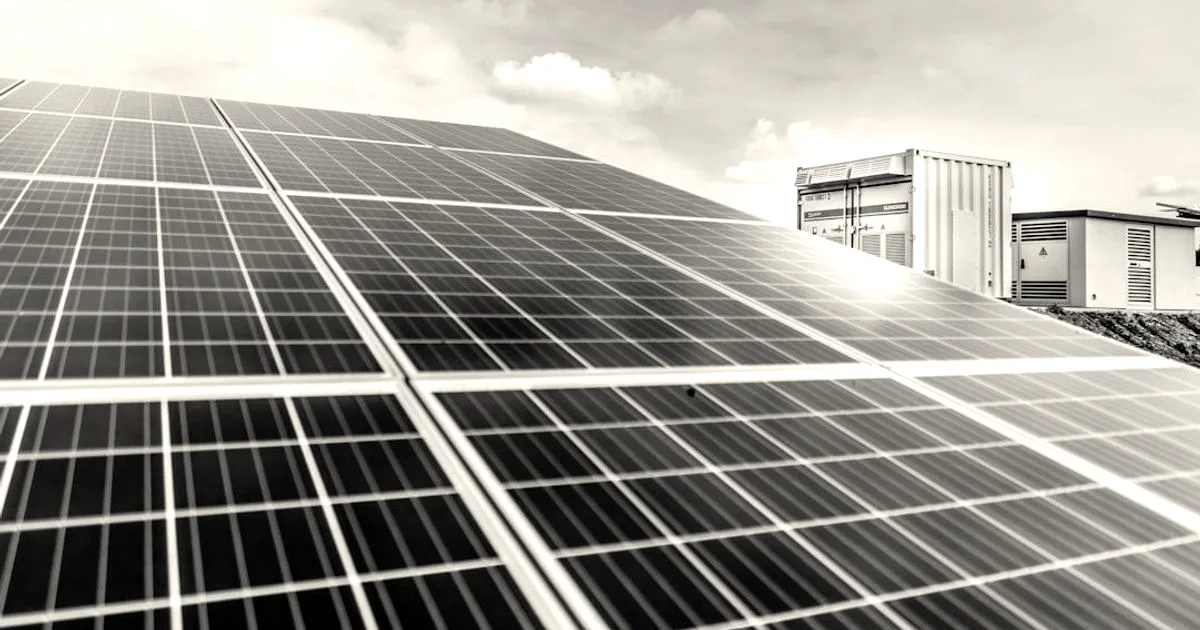
Google has made its largest solar power and battery storage purchase to date, the company said earlier this week. The first two phases of the project, located in Arkansas, will generate enough electricity to power about 6% of the state’s peak demand. Electricity from the project will flow directly to the grid, offsetting demand from Google’s data centers.
Google is both investing in the project alongside developer Cypress Creek Energy and purchasing the entire output of the first two phases, adding 1 gigawatt of solar capacity and 1.9 gigawatt-hours of battery storage to its portfolio. When completed, the three-phase project — called the Steel River Energy Center, located about 30 miles north of Memphis, Tennessee — will be the largest solar facility in the United States, the companies said. The third and final phase is scheduled to connect to the grid in 2029, bringing total capacity to about 1.8 gigawatts of solar and 2.9 gigawatt-hours of battery storage; Cypress Creek has secured $3.5 billion in financing for the first two phases. Pairing solar panels with large batteries will let the plant supply the grid around the clock, supporting Google’s push to match its electricity use with clean power on an hourly basis.
Google’s investment stands in contrast to xAI, which operates an unpermitted natural gas power plant about 40 miles to the south. Elon Musk has invested heavily in natural gas to power xAI’s Colossus data centers, despite also running Tesla, which makes solar panels and grid-scale batteries. xAI is running nearly 60 natural gas turbines without federal clean air permits, according to a Reuters report, and pollution from xAI’s power plant in Mississippi is affecting predominantly Black neighborhoods, Reuters found. Musk is unlikely to change course: he recently purchased APR Energy, a developer specializing in modular natural gas power plants.
Google has also invested in natural gas, working with Crusoe on a 933-megawatt plant in West Texas — though the company said that project is something of an anomaly, since it has mostly relied on clean power to expand its portfolio. Given the pace at which projects like Steel River can be deployed — nearly 2 gigawatts of solar capacity in three years — Google is likely to keep investing in renewables and batteries.
Why it matters
The contrast underscores two divergent strategies for powering AI data centers: Google leaning on large-scale solar-plus-storage to meet demand, xAI running gas turbines ahead of federal permitting while its founder doubles down on natural gas infrastructure.