Chips & Hardware
Gradient launches Nexus software for multifamily heat pumps
Gradient is launching Nexus software to link window heat pump units in multifamily buildings, enabling better energy efficiency and grid demand response in older structures.
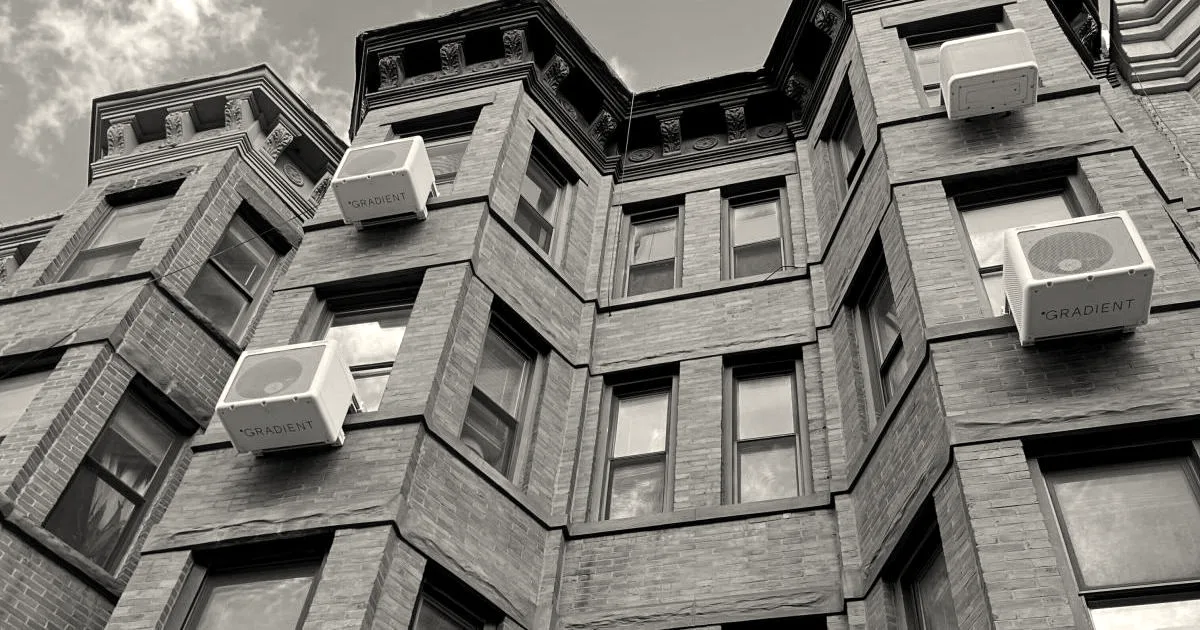
The hardware startup Gradient is launching its new Nexus software, a system designed to link window heat pump units—HVAC devices that can heat and cool—within multifamily buildings. The software gives building managers tools to set operational guardrails to prevent residents from overusing heating or air conditioning. By connecting individual window units, the software aims to bring centralized control to properties that historically lacked unified climate systems.
The software targets specific challenges in older buildings, such as aging boilers and limited electrical capacity. In these structures, retrofits—upgrading existing buildings with new technology—are often hindered by outdated infrastructure. According to Vince Romanin, Chief Technology Officer at Gradient, the company’s heat pumps are the lowest-cost option for old buildings with boilers reaching their end of life. To manage energy use, building managers can set temperature limits. In one instance, a manager set a heating limit of 78˚ F, which resulted in a drop in energy consumption of a quarter the following day.
Additionally, the software addresses electrical constraints. In buildings with old electrical wiring, Nexus can reduce the electrical draw to avoid exceeding a 12 amp load on a single outlet, according to Mansi Shah, Gradient’s Senior Vice President of Product and Software. This allows installations to proceed without requiring expensive electrical upgrades or transitioning to a minisplit, which is a type of HVAC system.
Gradient’s deployment of this technology includes partnerships in both public and affordable housing. The company has worked with the New York City Housing Authority to install its heat pumps, and has run a pilot in Tracy, California. Beyond individual building management, Gradient is working on a way to dial back heat pumps during grid stress while maintaining occupant comfort. This capability, known as demand response—adjusting energy usage to help the electrical grid—is designed to ease the burden on local power grids during peak demand.
By coordinating energy draw across multiple units, the company hopes to show that widespread building electrification does not have to destabilize local energy infrastructure. As Romanin noted: “There’s a lot of people who said when we electrify everything, the grid won’t handle it. I think that it is very possible to electrify everything and make the grid better, make the grid’s job easier, and make electrons cheaper.”
Why it matters
Retrofitting aging multifamily housing with modern HVAC is a massive, often ignored market. Gradient’s software approach offers a lower-cost path to electrification without requiring expensive electrical upgrades.