Chips & Hardware
Gritt raises $32M to build robots that install solar panels
Gritt, a robotics startup founded by two Carnegie Mellon-trained roboticists, exited stealth with a $26 million Series A led by Obvious Ventures, bringing its total funding to $32 million as it builds AI-controlled machines to install solar panels.
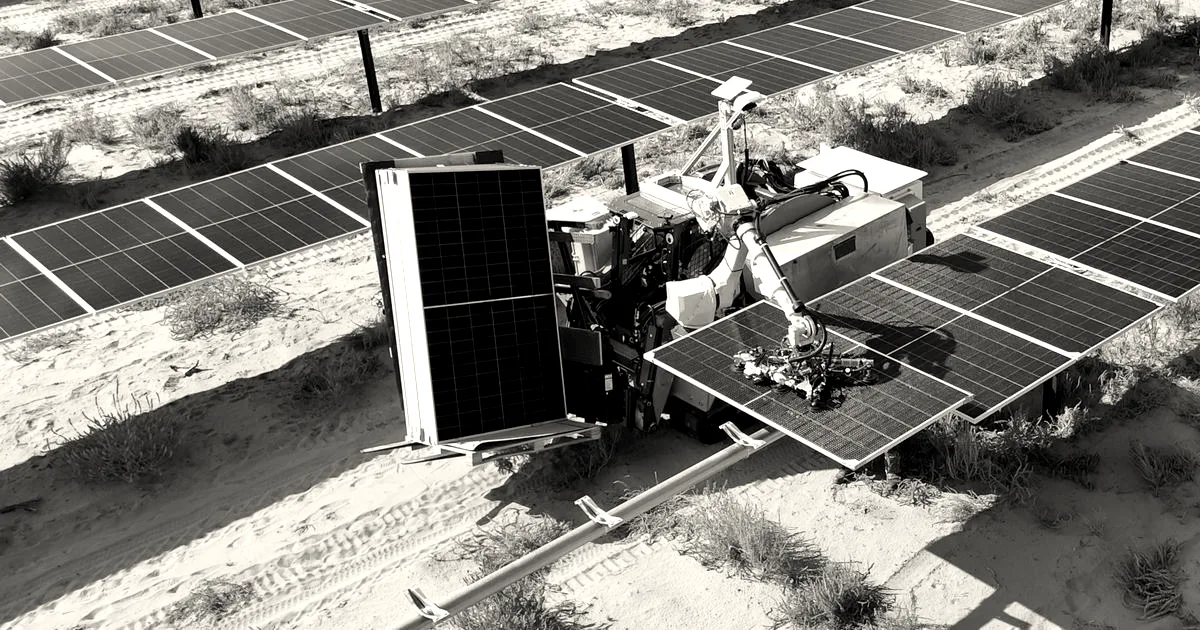
Gritt, founded by CEO Puneet Puri and CTO Vishal Dugar, two Carnegie Mellon-trained roboticists, exited stealth Tuesday with a $26 million Series A round led by Obvious Ventures, with participation from Union Square Ventures and Active Impact Investment. That brings its total funding to $32 million, following an earlier seed round backed by First Round Capital, Climactic, Congruent Ventures, and VSC Ventures.
The startup is targeting the labor shortage slowing the global solar build-out. Rather than building its own robots, Gritt uses off-the-shelf hardware — rented skidders and robotic arms from companies like Kawasaki — controlled by its own AI models. Its first task is unloading large glass solar panels, carrying them to their metal frames, and positioning them with sub-millimeter accuracy so workers can fasten them. Puri says a typical eight-person crew installs 800 panels a day; the same crew working with Gritt’s systems can install 3,000 to 4,000 panels a day.
Gritt has two systems deployed in the field today, and says it is contracted to help install 2.8 gigawatts of solar panels over the next 18 months, with customers including three of the top 10 U.S. power construction companies. It hopes to have 48 systems operating within six months. A Gritt customer, who declined to be identified for competitive reasons, told TechCrunch the system should make it easier to staff remote sites and expects fewer injuries, since workers will no longer have to repeatedly lift 100-pound panels overhead.
Gritt is competing against rivals building their own purpose-made hardware, including Luminous Robotics, Cosmic, and China’s Trinabot — a difference the company believes could shape who scales faster and leaner. It plans to add tasks like fastening panels, drilling posts, and building racks, and eventually wants to move into other labor-intensive construction work, such as tying rebar before concrete is poured. Puri credits the shift to newer AI models, which he says make the same underlying software pipeline reusable across tasks: training the system to stack cinder blocks took weeks, he said, but a similar demo with rebar tying took just a day using the same software.
Why it matters
If Gritt’s off-the-shelf approach scales as promised, it could ease one of the solar industry’s tightest bottlenecks — skilled labor — faster and more cheaply than rivals building custom robots from scratch.