Chips & Hardware
Harbinger partners with Frazer to build hybrid ambulances
Harbinger is partnering with 70-year-old ambulance builder Frazer to supply hybrid vehicle platforms and battery-based auxiliary power units for emergency and mobile healthcare vehicles.
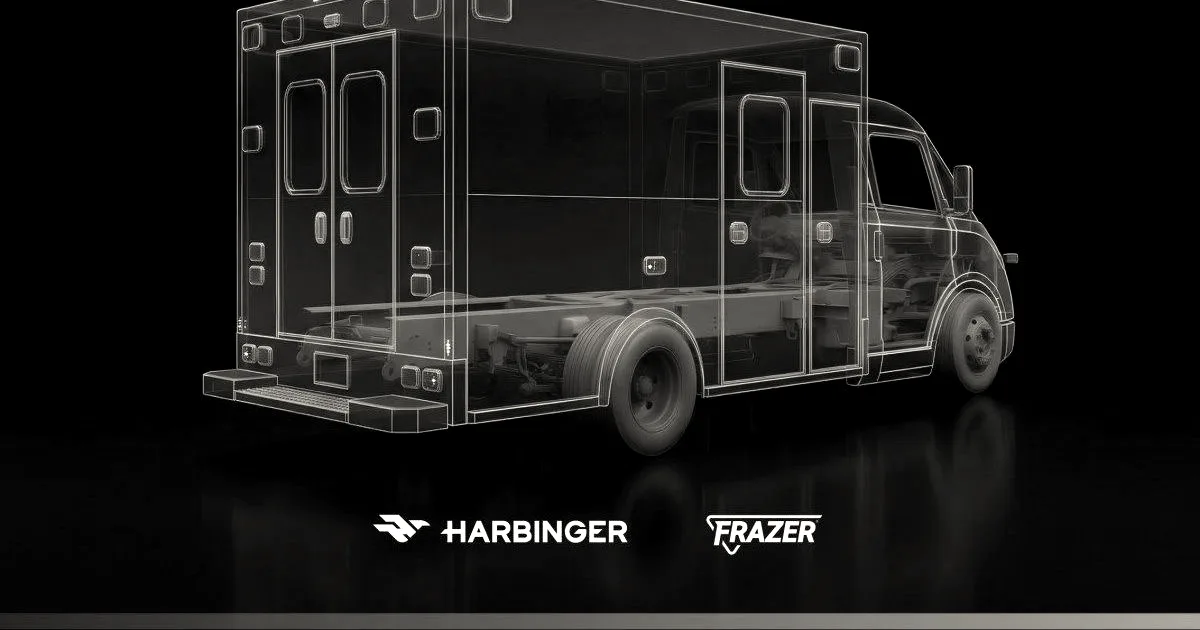
On Wednesday, trucking startup Harbinger announced a partnership with Frazer, a 70-year-old company that builds emergency vehicles. Under the agreement, Frazer will build ambulances and mobile healthcare vehicles on the hybrid version of Harbinger’s platform. Additionally, Frazer will become a customer of Harbinger’s new energy storage business, which the startup debuted earlier this year. The deal highlights how electric and hybrid vehicle companies are securing partnerships in the United States, even as the passenger vehicle space faces headwinds. For example, Detroit-based startup Grounded revealed this week that it worked with Colgate to develop a small fleet of mobile dental care vehicles.
The partnership demonstrates the versatility of Harbinger’s platform. The startup, which has raised more than $300 million to date, uses a chassis design that can be shortened or lengthened depending on customer requirements. According to co-founder and CEO John Harris, Harbinger maintains 99.5% part commonality across its platforms. This platform currently powers several vehicle types:
- Recreational vehicles (RVs), built in partnership with THOR Industries
- FedEx delivery vans
- A smaller box truck design
- Ambulances
Harris explained the efficiency of this design: “If you look across the step van and the RV use case, we’ve got three wheel bases, four different GVWR [gross vehicle weight ratings], and sort of four different powertrain options, with four, five, [or] six battery packs, plus the hybrid across all of that stuff. We have 99.5% part commonality,”
Frazer will also buy battery-based auxiliary power units—which serve as battery-based power sources for equipment—from Harbinger. Frazer CEO Laura Griffin stated that the company will use these units on both its new hybrid emergency vehicles and older combustion vehicles. These units will replace generators, allowing first responders to power medical devices in the field without drawing energy from the vehicle’s battery pack or combustion engine. Griffin noted that the switch to Harbinger’s hybrid powertrain—which is predominantly electric but leverages a gas engine to top up the battery—helps lower total cost of ownership and increases uptime for customers like municipalities, 911 entities, and hospitals. Harris added that the battery units offer a faster growth curve because of the thousands of existing ambulances, noting that operators prefer to save money and reduce emissions rather than run a generator six feet away for 12 hours a day.
Why it matters
Harbinger is proving the versatility of its electric vehicle platform by successfully expanding into the specialized emergency vehicle sector, demonstrating that its modular design can serve diverse industrial needs beyond standard delivery vans.