AI & Models
Human Archive raises $8.2M to train robots with gig worker data
Human Archive raised $8.2 million to collect egocentric video data from gig workers for physical AI training, despite facing regulatory scrutiny and pushback from local service platforms.
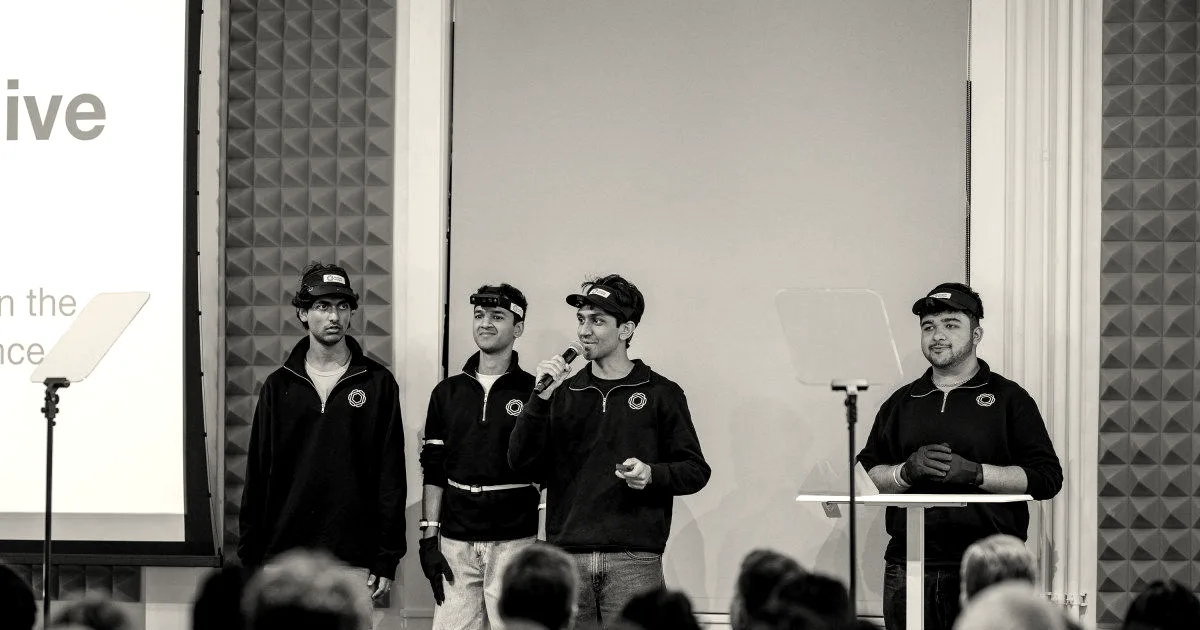
Silicon Valley-based startup Human Archive announced on Tuesday that it has raised $8.2 million in funding. The investment round was led by Wing Venture Capital, with participation from NVP Capital, Y Combinator, and angel investors from OpenAI, Nvidia, Google, Mercor, AfterQuery, BAIR, SAIL, Meta, and Brad Boa. Human Archive collects egocentric video data—meaning first-person point of view footage—from workers wearing special caps to train robots. These robots run on physical AI, which are AI models designed to perform physical tasks. The startup stated it has more than 1,000 active headsets deployed to capture these everyday tasks.
The startup’s data-collection efforts in India have met with resistance. Human Archive was rejected by Pronto and Urban Company for collaboration. The rejection became public after reports that Snabbit held early discussions with Human Archive before the project fell apart. Urban Company CEO Abhiraj Singh Bhal stated that the company would not engage in such arrangements. Tensions rose further when co-founder Rushil Agarwal reported that Pronto founder Anjali Sardana called him “stupid” when he raised the idea of a data partnership. Pronto acknowledged the conversations but denied calling Agarwal “stupid”.
Beyond corporate pushback, the startup faces regulatory and financial scrutiny. Human Archive pays workers a base rate of $1 per hour. In contrast, competitors in India reportedly pay ₹250 to ₹400 per hour, which is roughly $2.63 to $4.20. Meanwhile, regulatory scrutiny is mounting. Last week, Moneycontrol reported that India’s Ministry of Electronics and Information Technology is looking into the consent mechanisms and data-collection practices of startups collecting egocentric data.
To differentiate its dataset for AI labs, Human Archive is using and developing more than 50 different devices to capture diverse data points, including tactile gloves, full-body motion capture suits, and wrist cameras. This hardware captures motion and tactile force synchronously aligned with RGB-D, which is color imagery paired in real time with depth information.
“No one else in the world has been able to synchronize and collect headset RGB-D, force feedback, full-body motion capture, and synchronized chest and wrist camera data at scale. They’ve been doing internal model training on this data, and every major lab and university is interested in running experiments on it due to the novelty of the sensors and the scale of the new dataset they are releasing soon,” said Zach DeWitt, a partner at Wing VC.
The company, founded by Samay Maini, Rushil Agarwal, Shloke Patel, and CEO Raj Patel, has started expanding its operations beyond India into Southeast Asia and the U.S.
Why it matters
As robotics labs race to build machines that can perform physical tasks in the real world, they face a critical bottleneck of high-quality training data; Human Archive is betting that India’s gig economy can solve this, provided they navigate significant regulatory and operational hurdles.