Compute & Cloud
Deep Fission seeks $157 million Nasdaq IPO despite financial warning
Nuclear startup Deep Fission is seeking $157 million in a Nasdaq IPO, despite a "going concern" warning and a worsening financial deficit.
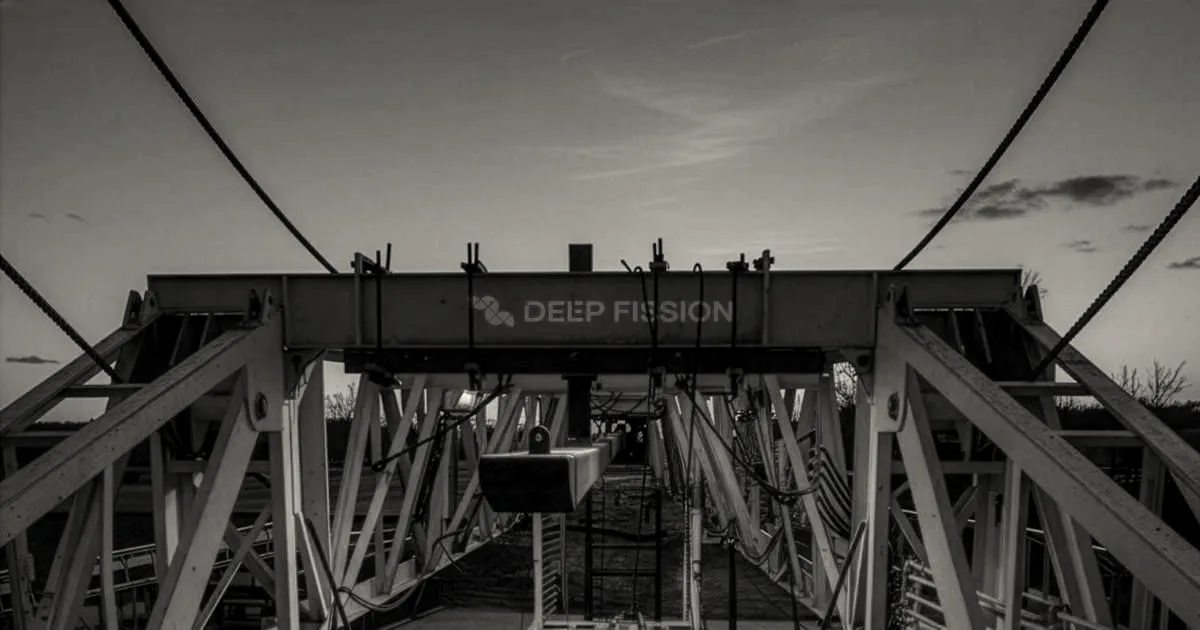
Deep Fission has filed an S-1 (an SEC registration form for new securities) to launch an IPO on the Nasdaq, seeking $157 million. The filing, submitted on May 20, contains a “going concern” warning, indicating that the company may not be able to continue operations if it does not complete the offering. The proposed share price range for the IPO is $24 to $26, which would value the company at up to $1.66 billion. This is a significant jump for a company that was targeting a $15 million funding round one year ago.
This IPO represents the company’s second attempt at a public listing. Last September, Deep Fission announced it had gone public via a reverse merger—a transaction where a private company acquires a public entity to gain a listing—with Surfside Acquisition, a Delaware shell company. That transaction raised $30 million in a concurrent private placement at a share price of $3. However, the company’s stock never actually traded following the reverse merger. Deep Fission had intended to list on the OTCQB, a marketplace for developing companies, but its S-1 filing denied that its stock had ever been publicly traded.
The startup’s financial position has worsened in recent months, as detailed in its latest filing. Key financial indicators include:
- The company’s deficit grew to $88.1 million as of March, up from a previous deficit of $56.2 million.
- Its cash and cash equivalents declined by $6.4 million, representing a decline of about 7%.
On the technical front, progress remains in the early stages. In March, Deep Fission started drilling its first test well to collect data up to 6,000 feet deep. However, this well is only eight inches in diameter. For commercial operations, the company will need boreholes with a diameter of 30 to 50 inches, meaning its current test well is significantly smaller than commercial requirements.
Despite these financial and technical headwinds, Deep Fission received an $80 million equity investment, which included a $20 million investment from data center developer Blue Owl. Blue Owl also signed a non-binding MOU (Memorandum of Understanding) for future power plants. The company’s timeline has also shifted; in a December filing, it aimed to achieve criticality—the point at which a nuclear chain reaction becomes self-sustaining—by July 2026, but it no longer provides an estimate. Deep Fission and its backers appear to be seeking to capitalize on investor interest in fission power, following the recent upsized IPO of industry peer X-energy. However, unlike Deep Fission, X-energy is generating revenue and is further along in the licensing process with the Nuclear Regulatory Commission.
Why it matters
Deep Fission is attempting a second public listing via a Nasdaq IPO to fund subterranean reactors for AI data centers, despite a “going concern” warning and a worsening financial position. The offering tests public investor appetite for early-stage nuclear technology amid the power demands of artificial intelligence infrastructure.