Policy & Regulation
Nuro secures California permit for driverless Lucid testing
Nuro has received a California permit to begin driverless testing of Lucid Gravity SUVs, though the company expects to start testing later this year.
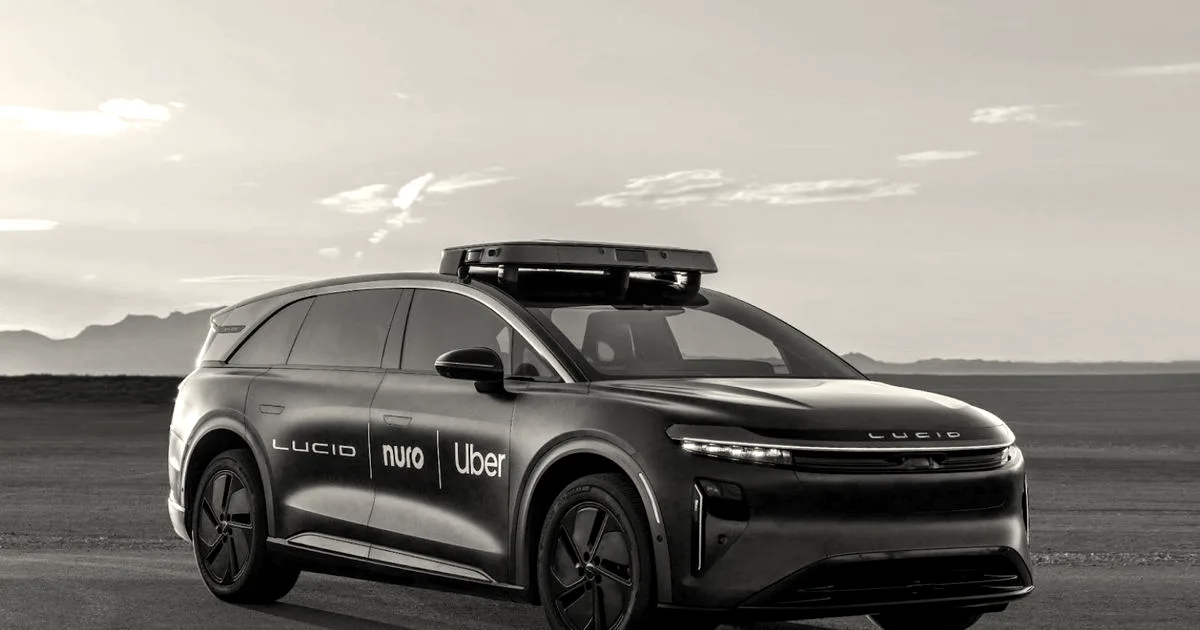
The California Department of Motor Vehicles has granted autonomous vehicle technology company Nuro a permit modification to begin driverless testing of Lucid Gravity SUVs on public roads in California. The regulatory update, confirmed by the agency on Tuesday, represents a key step toward Nuro’s robotaxi goals. Nuro has held a driverless permit for six years, but the authorization previously only applied to low-speed delivery vehicles—a program that was scrapped when the startup pivoted its business model to licensing its technology.
While Nuro spokesperson David Salguero stated that “the company expects to begin driverless testing later this year, without providing further information on timing,” the startup is not yet operating without drivers. Currently, Nuro and Uber are testing the Lucid vehicles in autonomous mode with a human safety operator in the driver’s seat. This testing was recently expanded to allow Uber employees to request autonomous rides in a Lucid robotaxi, with a human safety operator still on board. To transition to commercial operations, Nuro must still clear additional regulatory hurdles, including obtaining a driverless ride-hailing permit from the California Public Utilities Commission. Lucid has noted that commercial robotaxi operations are on track to begin in late 2026, though it is possible that these operations will not be driverless or will be limited depending on regulatory approvals.
The permit modification comes as Uber and Lucid expand their partnership. Uber, which is an investor in both Nuro and Lucid alongside autonomous vehicle computing hardware provider Nvidia, has significantly increased its financial and fleet commitments.
The updated agreement between Uber and Lucid includes the following details:
- Uber increased its investment in Lucid from an initial $300 million to $500 million.
- Uber expanded its vehicle purchase plans from an initial 20,000 robotaxi-ready Gravity vehicles to a minimum of 35,000 robotaxis.
- The updated minimum purchase includes at least 10,000 Gravity SUVs and 25,000 electric vehicles built on Lucid’s midsize platform.
These vehicles will be equipped with Nuro’s autonomous vehicle system, powered by Nvidia’s computing hardware. So far, Lucid has delivered 75 engineering vehicles to Nuro and Uber, with testing and mileage accumulation currently ongoing in several cities throughout the United States.
Why it matters
The permit is a necessary regulatory step for Nuro and Uber to launch their premium robotaxi service, which involves a significant expansion of their partnership and vehicle fleet.