AI & Models
OpenAI launches GPT-Live-1 voice models for ChatGPT
OpenAI has launched GPT-Live-1 and GPT-Live-1 mini, new full-duplex conversational models that replace ChatGPT's Advanced Voice Mode by default.
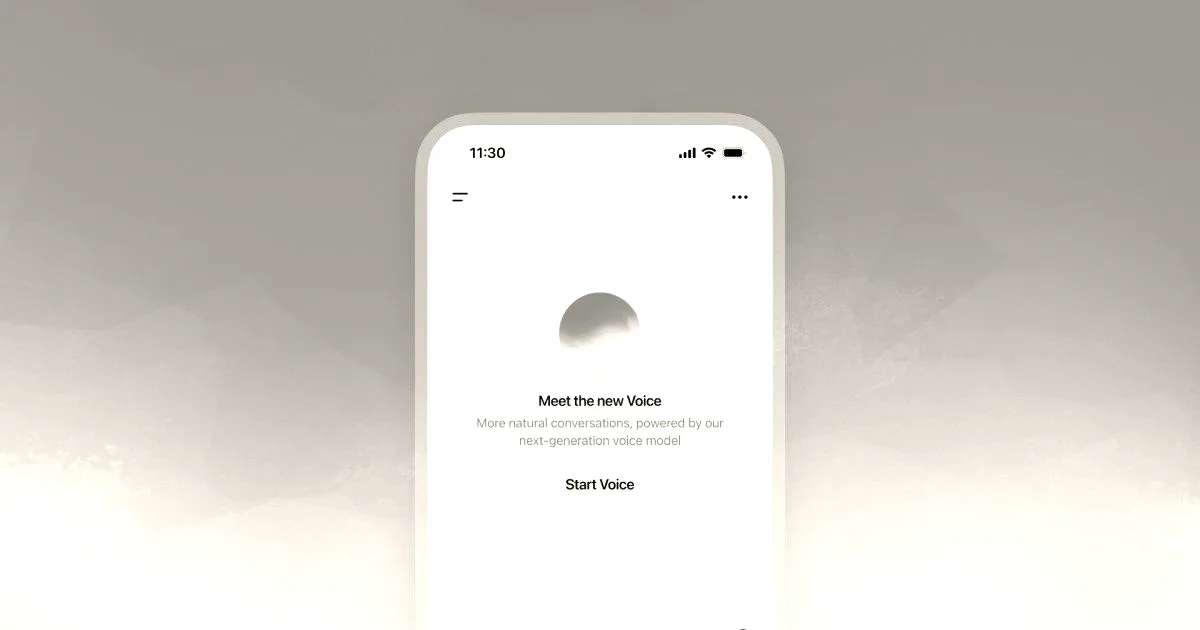
OpenAI today released two new conversational models, GPT-Live-1 and GPT-Live-1 mini, saying they sound more natural and handle turn-taking better than before. Both are full-duplex models — meaning they can speak and listen at the same time — which lets users interrupt naturally mid-conversation and enables features such as live translation. OpenAI is replacing ChatGPT’s current Advanced Voice Mode with GPT-Live-1 mini by default.
The new voice mode routes queries to OpenAI’s more advanced text models, such as GPT-5.5, for search, reasoning, or agentic capabilities — the ability to carry out complex, autonomous, long-running tasks — while the conversation keeps going. It’s also built for longer sessions: ChatGPT Voice’s product lead, Atty Eleti, said he has had 30- to 40-minute-long conversations with the feature during walks. Because the mode draws on newer GPT models, it can present some answers visually, putting OpenAI in the same lane as startups like Monogram, which raised $40 million in seed funding from DST and Lux Capital to build more interactive, visually responsive assistants. As Eleti put it: “Over time, we think this will also unlock the ability to use voice as a kind of primary interface to computing, and to manage increasingly complex long-running agentic work. The kind of amazing use cases that we see people using Codex and ChatGPT to accomplish, we think voice can be the future interface to all kinds of work.”
OpenAI sees voice becoming a primary interface for computing, building on a base where more than 150 million people already talk to ChatGPT through its Voice and Dictation features. Reports have suggested OpenAI could launch a pair of earbuds with AI capabilities this year, though the company gave no details on any hardware plans. Rivals are moving in the same direction: Apple and Amazon have both updated their assistants to be more conversational, and Sesame — an AI assistant startup founded by Oculus co-founder Brendan Iribe and Ankit Kumar — has launched assistants built around natural conversation while completing tasks in the background.
OpenAI said the new voice mode is optimized for most spoken languages, though it didn’t specify which ones. The models include safeguards built in to give age-appropriate responses to teens and provide resources if the conversation turns to topics like self-harm. Limits are still visible: in a live-translation demo in Hindi, the assistant spoke with a heavy American accent and used phrasing that sounded unnatural and bookish.
Why it matters
OpenAI is positioning full-duplex voice as the future primary interface for complex computing and agentic tasks, moving beyond simple voice assistants toward hands-free, long-running productivity.