AI & Models
OpenAI introduces dedicated health interface for ChatGPT
OpenAI is launching ChatGPT Health, a dedicated interface for wellness queries that will not use conversations for model training, expected to roll out in the coming weeks.
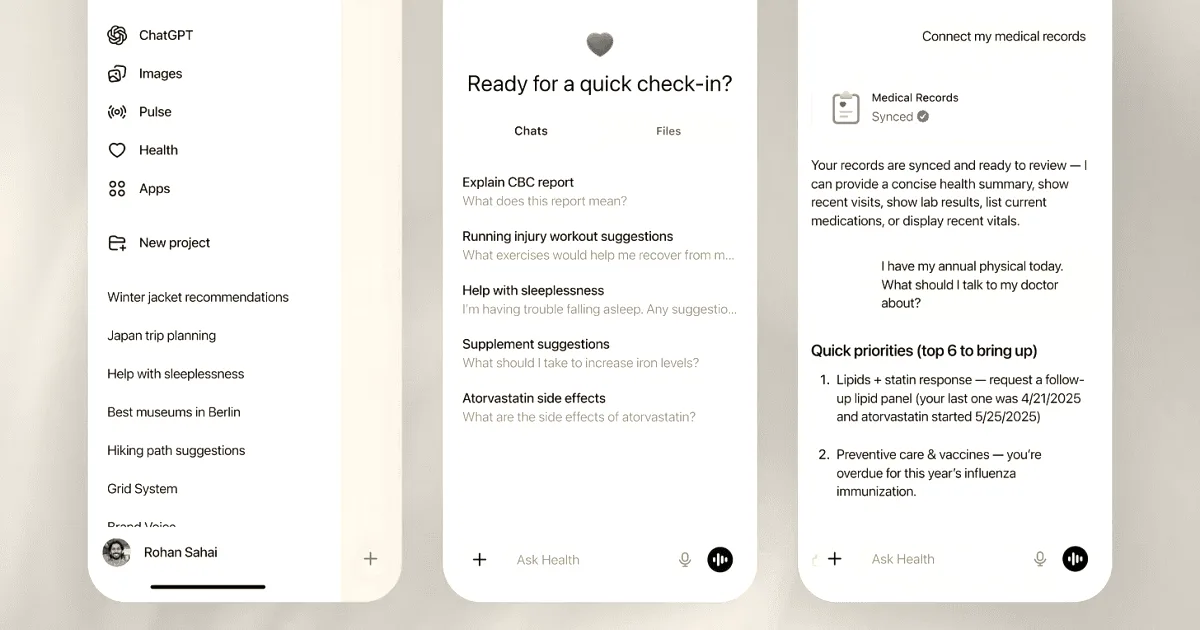
On Wednesday, OpenAI announced ChatGPT Health, a new interface designed to provide a dedicated space for users to have conversations about their health and wellness. According to OpenAI, over 230 million people already ask health and wellness questions on the platform each week. The new feature aims to address this existing behavior by siloing these health-related interactions away from standard chats, ensuring that the context of a user’s health does not appear in standard conversations with the chatbot. If users attempt to start health-related chats outside of this dedicated section, the AI is designed to nudge them to switch over to the Health interface. However, within the Health section, the AI might reference topics discussed in the standard experience, such as using a previously discussed marathon training plan to understand a user’s fitness goals.
The ChatGPT Health feature will also be able to integrate with personal information and medical records from wellness apps, including Apple Health, Function, and MyFitnessPal. To address privacy concerns, OpenAI explicitly stated that it will not use these Health conversations to train its models. Fidji Simo, the CEO of Applications at OpenAI, wrote in a blog post that she sees ChatGPT Health as a response to existing issues in the healthcare space, such as cost and access barriers, overbooked doctors, and a lack of continuity in care.
Despite these features, the integration of artificial intelligence into personal health management carries inherent risks. Large language models like ChatGPT operate by predicting the most likely response to prompts, rather than the most correct answer, because they do not have a concept of what is true or false. OpenAI reminds users that AI models are also prone to hallucinations—an AI term for incorrect or fabricated output. Consequently, in its terms of service, OpenAI states that the feature is “not intended for use in the diagnosis or treatment of any health condition.” The feature is expected to roll out in the coming weeks.
Why it matters
OpenAI is creating a dedicated health-focused interface that integrates with personal health data, while explicitly attempting to address privacy concerns by excluding these conversations from model training. This move signals a push to capture a massive existing user base of health-seeking consumers while navigating the strict regulatory and safety boundaries of the medical sector.