Chips & Hardware
Ouster launches Rev8 sensors to replace cameras in robotics
Ouster has launched its Rev8 sensor lineup, which combines lidar and camera functionality into a single chip, aiming to simplify sensor fusion for robotics and autonomous vehicles.
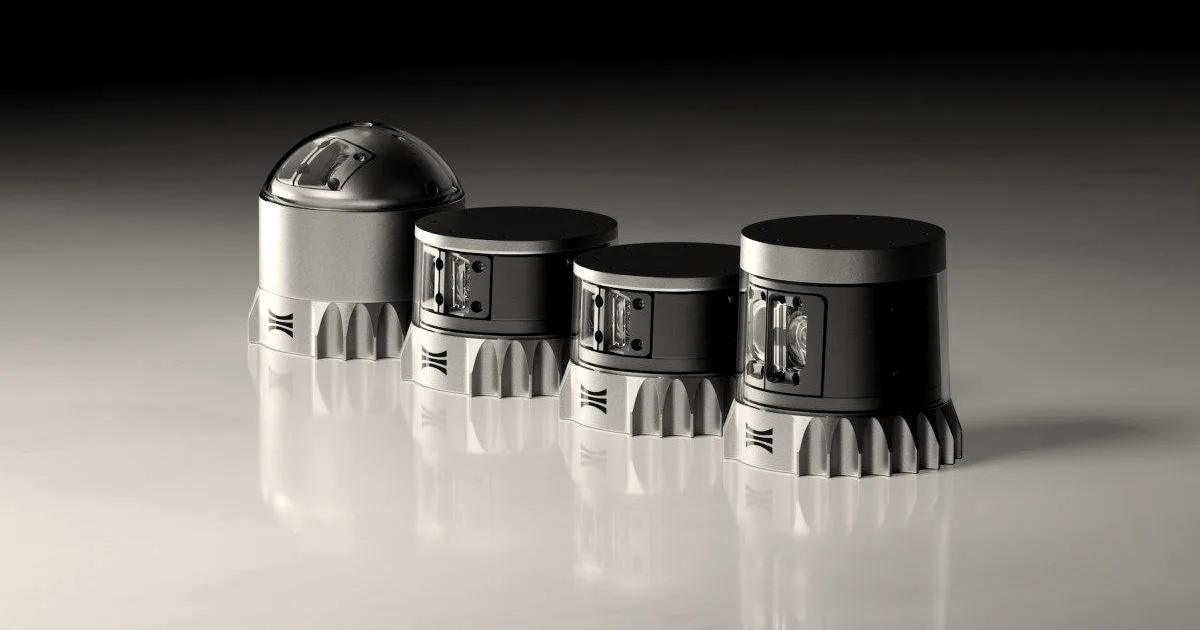
On Monday, San Francisco-based Ouster announced its new Rev8 sensor lineup. These sensors are capable of capturing color imagery and 3D depth simultaneously. According to Ouster CEO Angus Pacala, the goal of the new sensors is to replace cameras, simplifying sensor fusion for robotics and autonomous vehicle developers.
Ouster, which uses a digital lidar (Light Detection and Ranging) architecture rather than analog approaches, captures data directly on its chip using single photon avalanche diode (SPAD) detectors. The company is using this SPAD technology to capture color image data in the Rev8 sensors. To understand how to build a camera, Ouster partnered with Fujifilm for camera expertise and DXOMARK for image science. Pacala claims Ouster’s color lidar is improving on modern cameras.
According to Pacala, the system delivers specifications that allow it to function as a camera while outputting a pre-fused 3D colorized point cloud. The technical specifications for the new lineup include:
- Color depth: 48-bit color
- Dynamic range: 116 dB of dynamic range
- Maximum range: 500 meters of long-range lidar visibility
Pacala stated, “It’s 48-bit color, 116 dB of dynamic range, like mega pixel resolution. These are top-line numbers that make it pound for pound good camera. But it just so happens it’s coming as a pre-fused data stream as a 3D colorized point cloud.”
The launch arrives during a period of consolidation in the lidar industry, which has seen Ouster acquire Velodyne and the assets of Luminar acquired in bankruptcy. Meanwhile, the market for sensors is expanding as robotaxi operators like Waymo scale operations and robotics companies attract investment. This interest has also drawn new players, such as Boston-based Teradar, which is testing the waters with terahertz imaging.
Ouster is not alone in pursuing color lidar. Last month, Chinese rival Hesai announced its own color lidar platform, which Hesai reports will enter mass production by the end of this year. Other competitors, such as Innoviz, have also previously pitched their own versions of color lidar. However, Pacala claims that while other players package separate cameras and lidar sensors together in a box, Ouster and Hesai are putting the lidar and imaging technology on the same chip.
Why it matters
Ouster’s move to integrate imaging and depth sensing on a single chip could significantly reduce the complexity and cost of sensor fusion for robotics and autonomous vehicle developers, potentially rendering separate camera systems obsolete.