Startups & Funding
Impulse Space raises $500 million for in-space mobility
Impulse Space raised $500 million in a Series D round to expand its in-space mobility platform and hire as many as 200 new employees.
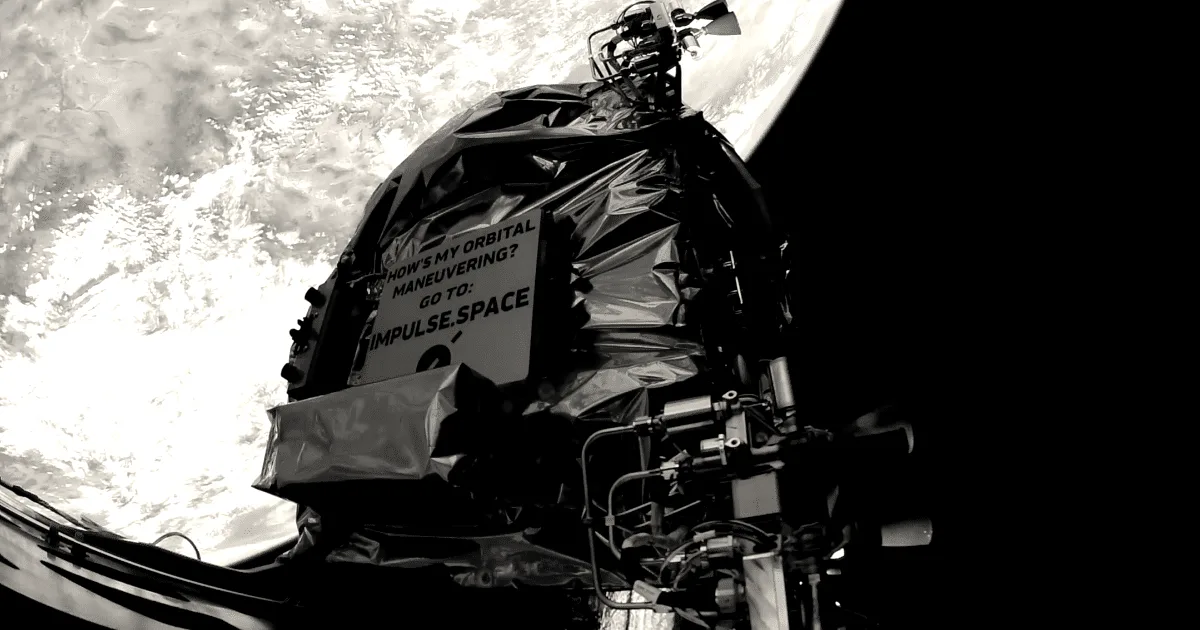
Impulse Space, a spacecraft startup founded by former SpaceX engine lead Tom Mueller, announced a $500 million Series D funding round this week. The late-stage funding round was led by 137 Ventures and BANNER VC, with participation from Founders Fund, Lux Capital, and Linse Capital. The company plans to use the new capital to hire as many as 200 new employees. Impulse Space is focused on in-space mobility, which refers to logistics and transport capabilities in space. To support its growing team, the company recently opened an office in Colorado, noting that aerospace talent is increasingly distributed across hubs like Los Angeles, Seattle, Denver, and Texas.
The company’s primary focus is developing maneuverable spacecraft platforms. This includes Mira, a platform targeted at U.S. Space Force buyers, and Helios, a vehicle designed to carry satellites.
While software teams are adopting AI tools, Impulse Space is prioritizing physical engineering over artificial intelligence for hardware design. Eric Romo, the company’s president and COO, joined SpaceX in 2003 as its 13th employee, where his role involved running computer simulations. Romo argues that deep learning models are not ready for real-world engineering problems. During his early days at SpaceX, Romo considered it a success if simulations got within 20% of the right answer because the digital tools were highly limited. He maintains that physical testing remains irreplaceable.
“They’ve improved, but they’ve not improved that much, and so there’s not really any substitute for designing the thing, analyzing the thing, building it, and then getting it on the test stand,” Romo said. He also noted that training data for hardware components—such as a turbo pump seal package, which is a component of a rocket engine—is not readily available online to train AI models.
The company is currently preparing a new Mira mission that is expected to launch before the end of the year. This upcoming launch follows a third flight late last year, where the Mira spacecraft experienced a navigation system problem. Specifically, a problem with its navigation system led it to expend much of its propellant early on.
Why it matters
The $500 million Series D round reflects investor interest in space and defense tech as the U.S. government increases spending on national security and SpaceX prepares for an IPO.