Apps & Consumer
World expands human verification to Tinder and ticketing platforms
World is expanding its "proof of human" verification technology to Tinder, ticketing systems, and business tools, while correcting false claims regarding a celebrity partnership.
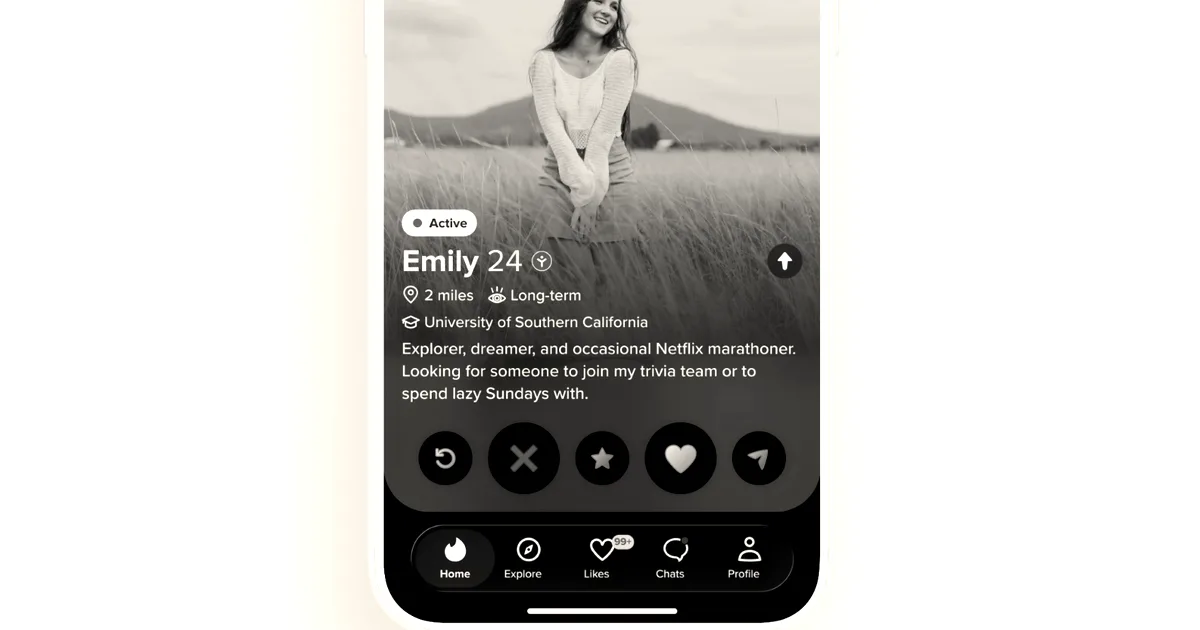
Tools for Humanity, the company behind the World project, is integrating its verification technology into dating apps, event ticketing, business organizations, and email. As part of this rollout, World is launching its World ID—a cryptographic identifier—verification integration on Tinder in global markets, including the U.S. This expansion follows a pilot program in Japan. Additionally, World is integrating its technology with Zoom and Docusign. The Zoom integration seeks to battle a supposed deepfake threat to business calls, while the Docusign partnership is designed to ensure signatures come from authentic users. World has also partnered with authentication firm Okta to verify that an AI agent is acting on behalf of a human.
To address ticket-buying bots, World introduced “Concert Kit,” a feature that allows musical artists to reserve tickets for verified humans. The feature is compatible with ticketing systems such as Ticketmaster and Eventbrite. During its keynote on Friday, World claimed it had partnerships with the band 30 Seconds to Mars and solo artist Bruno Mars. However, Live Nation, representing the singer’s management team, corrected the claim. A Live Nation representative stated that Tools for Humanity referenced a partnership with Bruno Mars and The Romantic Tour in their keynote last Friday, April 17, that does not exist. The representative added that the tour’s management was never approached by Tools for Humanity, nor were they in any discussions regarding a partnership.
To support the scaling of its proof of human mechanism—which is used to verify human activity against AI agents—World is expanding the physical saturation of its Orb devices. The Orb, a spherical digital reader used for iris scanning, will see increased availability in New York, Los Angeles, and San Francisco. To lower the barrier to entry, World is also introducing different verification tiers. Alongside the high-security Orb scan and a mid-level government ID scan, the company introduced a low-level tier called Selfie Check. Daniel Shorr, an executive at Tools for Humanity, stated that the selfie check is private by design, processing images locally on the user’s device.
The expansion comes as World’s founders position the platform as a necessary infrastructure for an internet increasingly populated by artificial intelligence. Sam Altman, CEO and founder of World, noted the rapid advancement of AI technologies. “We are also heading to a world now where there’s going to be more stuff generated by AI than by humans,” Altman said, framing the cryptographic verification system as a tool to help users distinguish between human and synthetic interactions.
Why it matters
World is attempting to scale its “proof of human” verification technology by integrating with major consumer platforms like Tinder and ticketing systems, while simultaneously expanding physical access to its Orb scanners.