Chips & Hardware
SpeakON launches MagSafe dictation device for $129
Notta has launched SpeakON, a $129 dictation device using Apple's magnetic mounting technology, but the product faces early platform and software challenges.
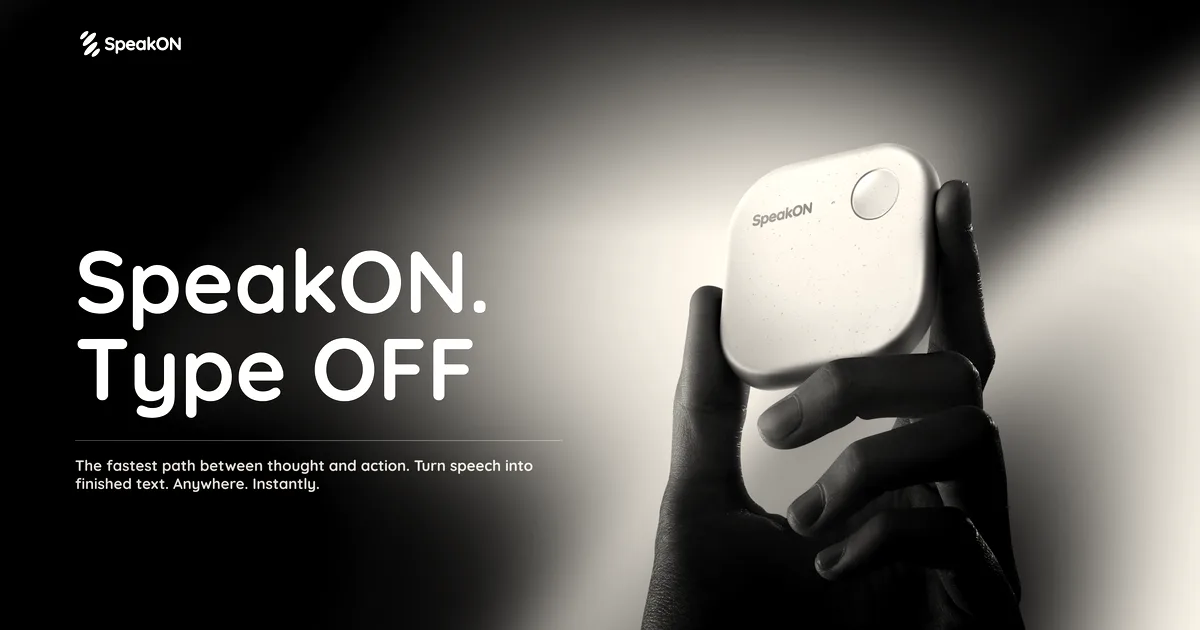
Notta, the parent company of SpeakON, has introduced the SpeakON dictation device to the market. The hardware is designed as a small, pebble-like device that attaches directly to the back of an iPhone using Apple’s magnetic mounting technology (MagSafe). Weighing exactly 25 grams, the physical device is highly portable, allowing users to carry it easily in a pocket without feeling its weight. By utilizing its own dedicated microphone rather than relying on the iPhone’s built-in microphone, the hardware aims to address common audio capture issues that users experience with standard mobile dictation.
The hardware is equipped with one mic that is designed to capture audio within a range of two feet. According to SpeakON, the device could provide 10 hours of continuous battery life on a single charge, alongside a 20-day standby time. The device is priced at $129 and comes bundled with a weekly dictation plan, positioning it against several software-only alternatives in the dictation space:
- SpeakON: The $129 hardware purchase includes a plan that allows users to dictate 5,000 words per week. For users requiring more volume, SpeakON offers an unlimited dictation plan priced at $12 per month.
- Competitors: Software-based dictation applications such as Wispr Flow and Willow typically offer a lower limit of 2,000 words per week on their respective free tiers. Other competitors in the dictation and transcription market include Typeless, as well as Plaud, which operates as an AI meeting notetaker.
Despite its early mover advantage, the device currently faces notable platform and software limitations. The device is currently restricted to iOS support, and its companion application occasionally forces unwanted tone and vocabulary adjustments during transcription. During testing, the software’s AI editing features frequently replaced simple, direct language with more complex phrasing. For example, the application converted a straightforward question about whether the software operates automatically into a more formal sentence structure, and it substituted the word complex with tricky. In another instance, when the TechCrunch writer dictated “Sure, no worries”, the AI software adjusted the phrase to state that there was no need to be concerned.
Why it matters
SpeakON has an early mover advantage in the dictation device market, but it must expand platform support and refine its software to fend off competitors who could easily replicate the hardware form factor.