Chips & Hardware
Teradar unveils Summit terahertz sensor for automotive market
Boston-based Teradar has unveiled its flagship terahertz sensor, Summit, which aims to ship in 2028 if the company successfully secures contracts with automotive manufacturers.
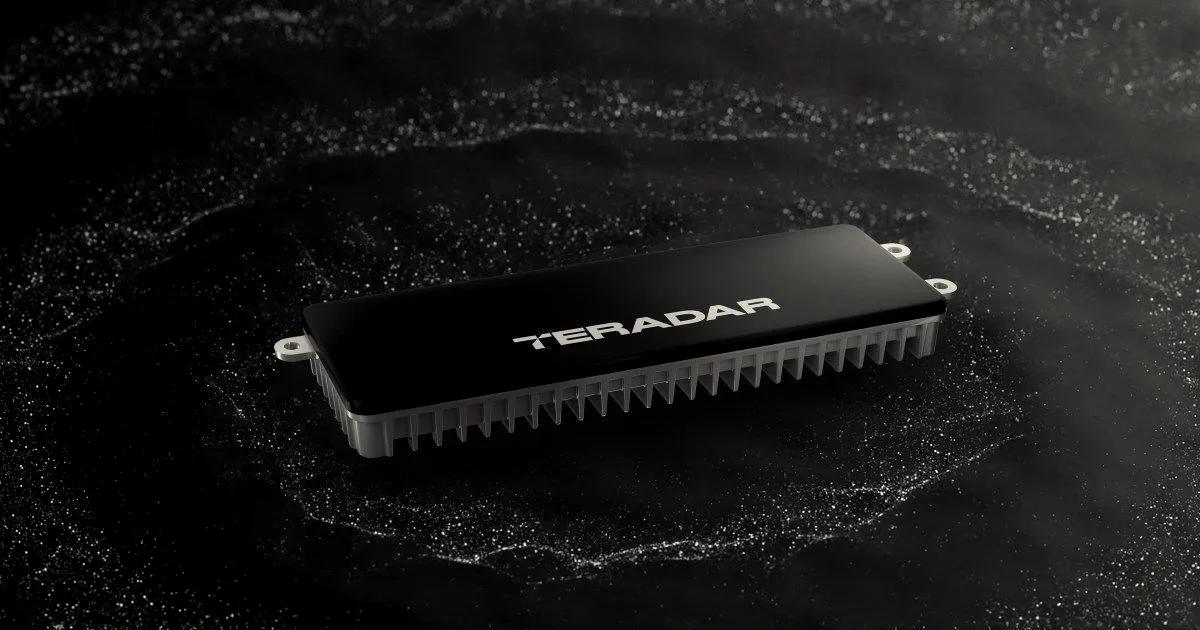
Boston-based sensor company Teradar is debuting its flagship terahertz sensor, called Summit, at the Consumer Electronics Show 2026. The company is positioning the solid-state sensor—which is a sensor with no moving parts—as a solution to the limitations of legacy radar and lidar (light detection and ranging sensor technology). By leveraging the relatively unused terahertz band of the electromagnetic spectrum, which sits between microwaves and infrared, the sensor is designed to deliver high performance in any weather condition. However, actually getting the technology onto the road remains conditional: the sensor will start shipping in 2028 if Teradar can lock down contracts with automakers.
Teradar is entering a highly volatile automotive sensor market characterized by severe financial distress and consolidation among Western players, contrasted with rapid scaling in China:
- Luminar: The U.S. lidar company filed for bankruptcy protection in December after contracts with automakers fell apart.
- Ouster and Velodyne: These competitors underwent a wave of consolidation, resulting in Velodyne merging with Ouster, which subsequently diversified into other potential markets like robotics and smart infrastructure.
- Hesai: In contrast to struggling Western firms, the Chinese lidar company announced in October that it had built more than 1 million lidar sensors in 2025.
To navigate this challenging landscape, Teradar is backed by a $150 million Series B fundraise. The round included funding from Lockheed Martin, a defense company with a venture arm, and VXI Capital, a defense-focused venture fund. Teradar is currently working to prove its technology with five top automakers from the U.S. and Europe, alongside three Tier 1 suppliers—which act as direct suppliers to automotive OEMs.
CEO Matt Carey, who spoke about the company’s strategy in November, is prioritizing broad automotive integration. “Our main job is to make sure our sensor gets on all automobiles, and whatever the best way to do that is, that’s what we’re going to pursue,” Carey said. While some automakers are still integrating lidar—such as Rivian, which in December announced plans to integrate a roof-mounted lidar sensor in its upcoming R2 SUV—Teradar is betting that its terahertz-band technology can offer a more reliable, weather-resistant alternative.
Why it matters
Teradar is positioning its new solid-state terahertz sensor as a solution to the limitations of legacy radar and lidar, aiming to fill a gap in the automotive sensor market as competitors face consolidation and bankruptcy.