Apps & Consumer
Anthropic expands Claude Cowork to web and mobile
Anthropic has expanded its Claude Cowork agent to web and mobile, signaling a strategic shift toward general administrative tasks rather than just software development.
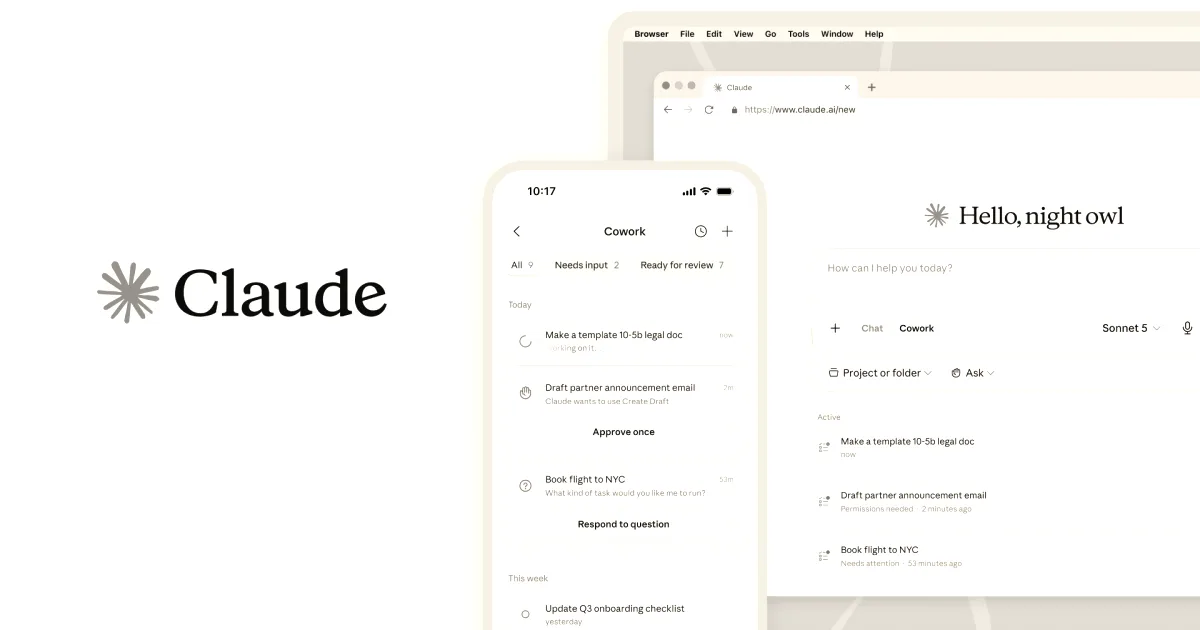
On Tuesday, Anthropic expanded its Claude Cowork tool to web and mobile platforms for users on its paid subscription tier, Max. The tool, which originally launched as a desktop application in January, is designed to perform tasks autonomously. The multi-platform expansion allows users to initiate tasks on a desktop, monitor progress via mobile, and retrieve the completed output later, even when their computer is offline. While the desktop application remains the primary interface for deep work requiring local file access, the web and mobile versions aim to make the tool accessible to users who have not installed the desktop software.
This expansion highlights a broader shift as the competition over software development agents moves into general office administration. AI labs are increasingly competing to control the digital environments where daily business operations occur, moving beyond simple conversational chatbots. For example, competitor OpenAI has made a similar move with Codex, which began as a software development tool but is increasingly used by non-developers for tasks like generating reports and spreadsheets. Anthropic has also expanded its footprint in collaborative workspaces with Claude Tag, an AI teammate integrated directly into Slack.
According to Anthropic, the clearest use case for Claude Cowork is handling the administrative “work around the work” that keeps companies functioning. To analyze how the tool is being used, the company conducted a study sampling 1.2 million anonymized and aggregated Cowork sessions across more than 600,000 organizations during the last two weeks of May. The data revealed that software development represents only a small fraction of the tool’s actual usage:
- Business process operating (33.4%): This category includes tasks such as compiling reports from scattered updates, creating onboarding checklists, and reconciling spreadsheets.
- Content creation and copywriting (16.4%): This category covers drafting communications, slide decks, proposals, and social media posts.
- Software development (8.7%): This represents the smallest of the primary tracked categories.
“While coding is still — understandably — one of the uses of AI that gets the most attention, the use of AI for everyday business work is on the rise, and the kinds of tasks people are finding it most helpful for are coming into focus,” Anthropic stated regarding the findings.
Why it matters
The expansion signals Anthropic’s intent to position Cowork as an autonomous administrative coworker rather than just a coding tool. It reflects a broader industry strategy where AI labs are competing to own the digital surfaces where actual work occurs.