Startups & Funding
Antioch raises $8.5M to bridge the sim-to-real gap for robots
Antioch, a simulation startup for physical AI, raised an $8.5 million seed round at a $60 million valuation to help developers close the sim-to-real gap.
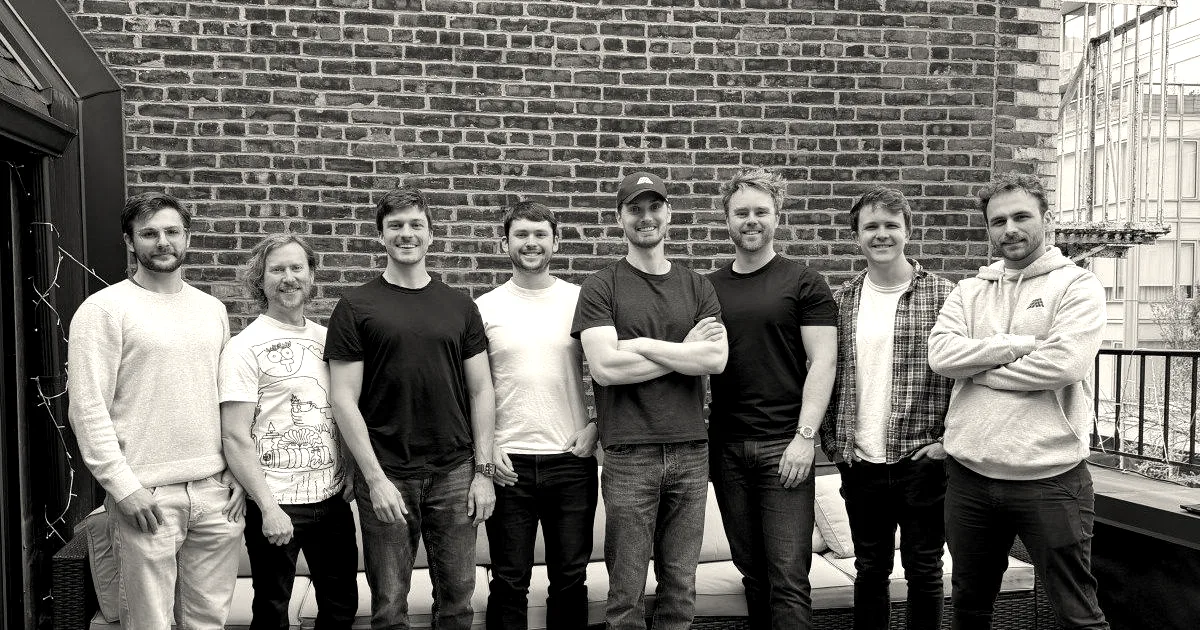
Antioch, a New York-based startup building simulation tools for robot developers, has raised an $8.5 million seed round at a $60 million valuation. The company was founded in May of last year by Harry Mellsop and four co-founders. The funding round was led by venture firms A* and Category Ventures, with participation from several other investors:
- MaC Venture Capital
- Abstract
- Box Group
- Icehouse Ventures
The startup aims to close the sim-to-real gap—defined as the challenge of making virtual environments realistic enough that robots trained inside them can operate reliably in the physical world. This is a critical hurdle for physical AI, which refers to artificial intelligence systems that operate in the physical world, such as robots. According to Mellsop, the vast majority of the robotics industry does not use simulation. Instead, training models often relies on ‘surveilling factory lines and gig workers’ to gather data. Antioch wants to provide detailed virtual replicas of real-world environments to offer a scalable alternative to expensive physical testing.
Antioch’s founders compare their product to ‘Cursor’, an AI-powered software development tool. The platform allows developers to spin up multiple digital instances of their hardware and connect them to simulated sensors, mimicking the data a physical robot would receive. This software-first approach aims to make testing safer and more accessible. Adrian Macneil, an angel investor in Antioch and former executive at the self-driving startup Cruise, spoke about the technology on Wednesday at the Ride AI conference in San Francisco. Macneil, who also founded the data pipeline startup Foxglove in 2021, noted that simulation is crucial for building safety cases and high-accuracy tasks. Mellsop believes this shift is imminent, stating, “We genuinely all think that anyone building an autonomous system for the real world is going to do so in software primarily in two to three years.”
To build its simulations, Antioch starts with models from providers like Nvidia and World Labs, building domain-specific libraries to make them easier to use. The platform is already seeing early academic use; David Mayo, a researcher at MIT, is using Antioch’s simulator to evaluate large language models by having them design and test virtual robots.
Why it matters
Antioch is tackling the sim-to-real gap by building a platform for scalable testing of autonomous systems. If successful, this software-first approach could reduce the reliance on expensive physical infrastructure for robot development, allowing smaller startups to build and test physical AI without needing massive capital.