Compute & Cloud
Uber expands AWS cloud contract to include AI chips
Uber is expanding its AWS cloud contract to run more ride-sharing features on Amazon’s chips, signaling a competitive shift away from its previous Oracle and Google infrastructure.
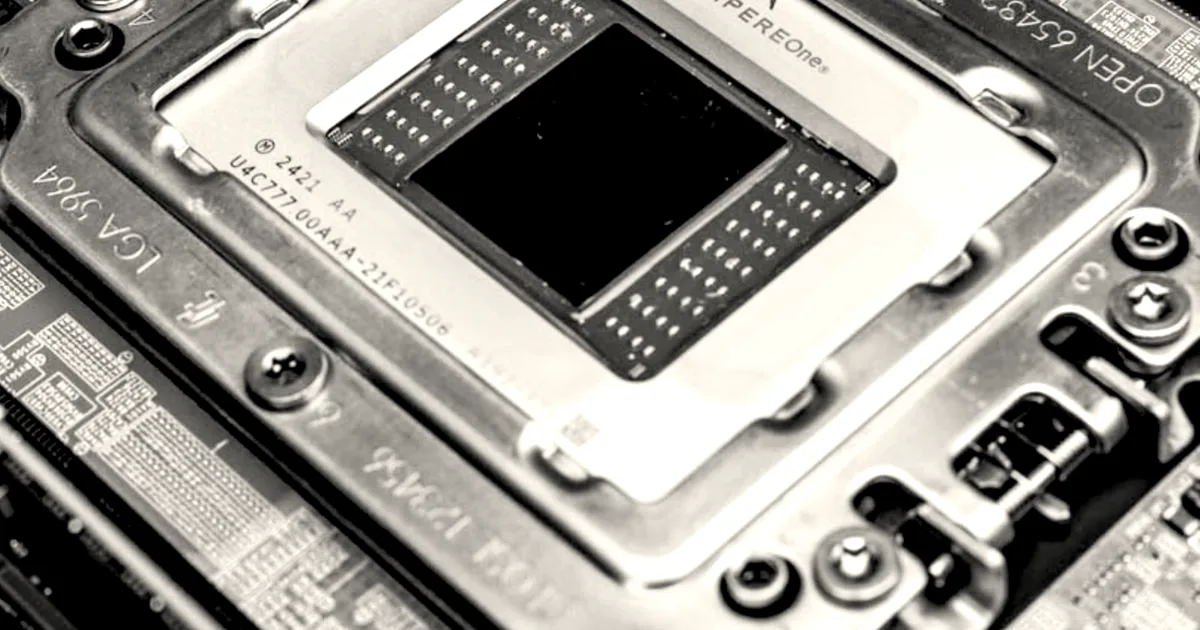
On Tuesday, Amazon announced that Uber is expanding its contract for AWS cloud services to run more of its ride-sharing features on Amazon’s chips. Under the expanded agreement, Uber will increase its use of AWS’s Graviton—a low-power, ARM-based server CPU—and begin a new trial testing Trainium3, which is AWS’s AI chip.
The expansion represents a shift from Uber’s strategy in 2023, when the company signed cloud computing deals with Oracle and Google. At the time, Uber’s goal was to transition the majority of its IT infrastructure from its own data centers to Oracle Cloud Infrastructure (OCI) and Google Cloud Platform. In a company blog post, Uber described the transition as “In February 2023, Uber began transitioning from on-premise data centers to the cloud using OCI and Google Cloud Platform, taking on the dual challenge of shifting massive workloads and introducing Arm-powered compute instances into a previously x86-dominated environment.” This shift introduced Arm-powered compute instances into an environment previously dominated by x86, a standard CPU architecture. The new deal with AWS is a bit less about a long-term threat to Nvidia than it is a rejection of Google and Oracle.
The deal highlights Amazon’s progress with its own silicon. Amazon CEO Andy Jassy has stated that the Trainium business is already a multibillion-dollar business. Uber now joins other technology companies, including Anthropic, OpenAI, and Apple, that have signed on or increased their usage of AWS because of these chips. This contrasts with Oracle’s recent exit from chip design. Oracle executive Larry Ellison stated that Oracle sold its stake in chip designer Ampere because designing chips in-house was no longer a competitive advantage for its data centers. The history of Ampere illustrates the inter-tangled nature of Silicon Valley. Oracle previously owned about one-third of Ampere, which was founded by former Intel executive Renee James. James had previously served on Oracle’s board, where she voted in favor of Oracle’s $9.3 billion purchase of NetSuite in 2016. That deal sparked an unsuccessful shareholder lawsuit alleging Oracle overpaid for it. James left Oracle’s board at the end of 2024, and Oracle eventually sold its stake in Ampere for a $2.7 billion pre-tax gain.
Why it matters
AWS is successfully leveraging its silicon to capture major enterprise workloads, challenging competitors like Oracle and Google in the cloud infrastructure market.