Chips & Hardware
Waymo robotaxis increasingly rely on first responders to clear roads
Waymo robotaxis are increasingly relying on taxpayer-funded first responders to move vehicles during emergencies, raising concerns about the sustainability of the company's current roadside assistance model.
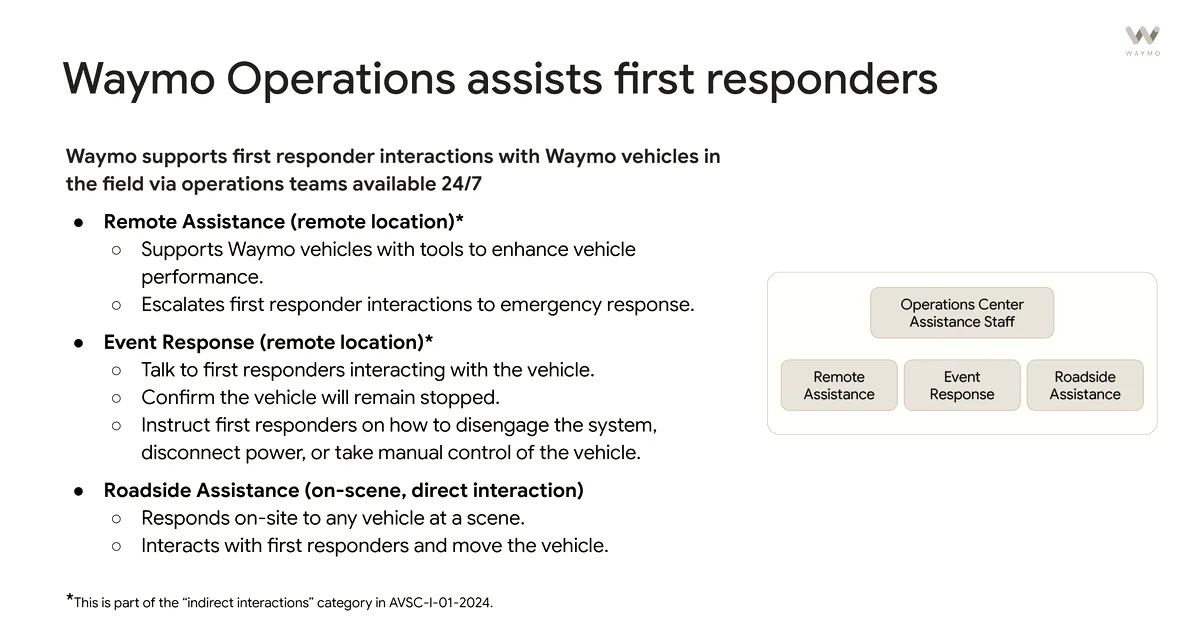
Last August, a fire burned 10 acres near Redwood City, California, highlighting a growing operational challenge for autonomous vehicle operators. During the incident, a Waymo robotaxi became stuck, prompting a remote assistance worker—defined as a worker who provides guidance to autonomous vehicles from a distance—to call emergency services. According to a recording, the worker explained that the highway patrol had turned traffic around, but the autonomous vehicle was unable to turn around. Roughly 30 minutes passed between the call and a California Highway Patrol officer physically moving the vehicle. While Waymo maintains a dedicated roadside assistance team—which provides on-ground support—to handle on-scene interactions, public safety officers have had to intervene to move stuck autonomous vehicles in at least six instances.
Waymo currently operates roughly 3,000 vehicles, delivering more than 400,000 paid rides per week. To manage this fleet, the company employs around 70 remote assistance workers split between the U.S. and the Philippines. Waymo reports a median one-way latency of approximately 150 milliseconds for U.S.-based operations and 250 milliseconds for remote assistance based abroad. However, this remote setup has faced operational failures. In January, the National Transportation Safety Board reported that a remote assistance worker wrongly told a robotaxi in Austin it could proceed past a school bus with stop arms extended. Furthermore, vehicles have entered active crime scenes, including an incident where an officer had to move a vehicle during a mass shooting.
During a March 2 hearing held by the San Francisco Department of Emergency Management, city officials criticized the reliance on public safety officers to manage private autonomous fleets. Mary Ellen Carroll, the department’s executive director, stated, “What has started to happen is that our public safety officers and responders are having to be the ones to physically move [Waymos]” to clear traffic. Officials argued that using emergency personnel as a default roadside assistance service is not tenable, particularly after vehicles became stalled during a major power outage in December. In response, Waymo noted that its roadside assistance is a dedicated team of specialists providing extra on-the-ground support, and a manager stated the company has trained more than 30,000 first responders on how to interact with its vehicles.
Why it matters
The reliance on public safety resources to manage private autonomous fleets creates a sustainability conflict between tech scaling and municipal emergency operations. As autonomous vehicle companies expand, using municipal emergency personnel as a default support service presents an ongoing challenge for local governments.