AI & Models
Waymo releases new benchmark model for robotaxi safety
Waymo and TU Delft released a new 'Reference Driver' model that uses active inference to benchmark autonomous driving software against human behavior in crash scenarios.
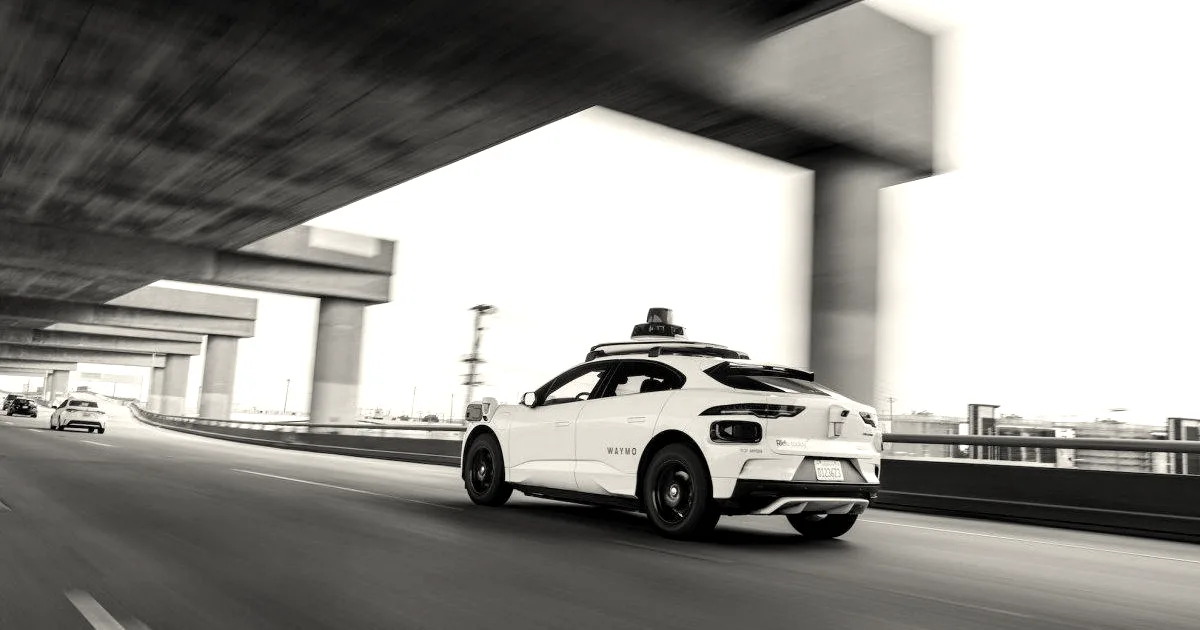
On Wednesday, Alphabet-owned robotaxi company Waymo and research partner TU Delft published a research paper in the journal Nature Communications about a new computer model created to compare autonomous driving software to human driving. Waymo expects the new model, which it calls the Reference Driver, to be more advanced than the previous version it has used for several years. The model uses active inference, which is the theory that a driver imagines possible futures to reach the safest outcome.
The Reference Driver helps Waymo understand human behavior in crash scenarios. Unlike previous industry models that focused on replicating last-second, reactive human maneuvers, this model can reproduce a human driver’s behavior in the run-up to a crash. Arkady Zgonnikov, an assistant professor at TU Delft, stated that the model can “simulate the internal ‘surprise’ a driver feels during a conflict, providing a more human-like benchmark for autonomous driving systems that was previously impossible to automate at scale.” Waymo says the model can be adapted to model a wide range of road user behaviors beyond collision avoidance.
The release comes as Waymo faces increased scrutiny from regulators and the public. In January, a Waymo robotaxi struck a child near a school in Santa Monica, California. The crash is still under investigation by the National Highway Traffic Safety Administration and the National Transportation Safety Board—both US federal safety regulators. In that incident, Waymo relied on its previous computer model to claim that an attentive human driver would have made impact at around 14 miles per hour. By comparison, the Waymo robotaxi struck the child at just 6 miles per hour, after decelerating from 17 miles per hour.
To encourage broader collaboration, Waymo is making the research code for the Reference Driver available under an academic, non-commercial license. The company frames the model as an evolution of the automotive industry’s long-standing use of physical and virtual crash dummies to evaluate a car’s safety features, including its hardware and structural integrity. Waymo says the new model evolves this concept, serving as a behavioral benchmark for autonomous driving systems that can realistically represent reasonable expectations on how a careful and competent human driver responds to traffic conflicts.
Why it matters
As Waymo scales to more cities, the company faces increased scrutiny. By simulating complex human decision-making rather than simple reactive maneuvers, this model attempts to provide a more transparent standard for evaluating robotaxi performance.