Apps & Consumer
YouTube begins automatically labeling AI-generated videos
YouTube is moving to automatically label videos containing significant photorealistic AI, reducing its reliance on creator disclosures while maintaining existing platform policies.
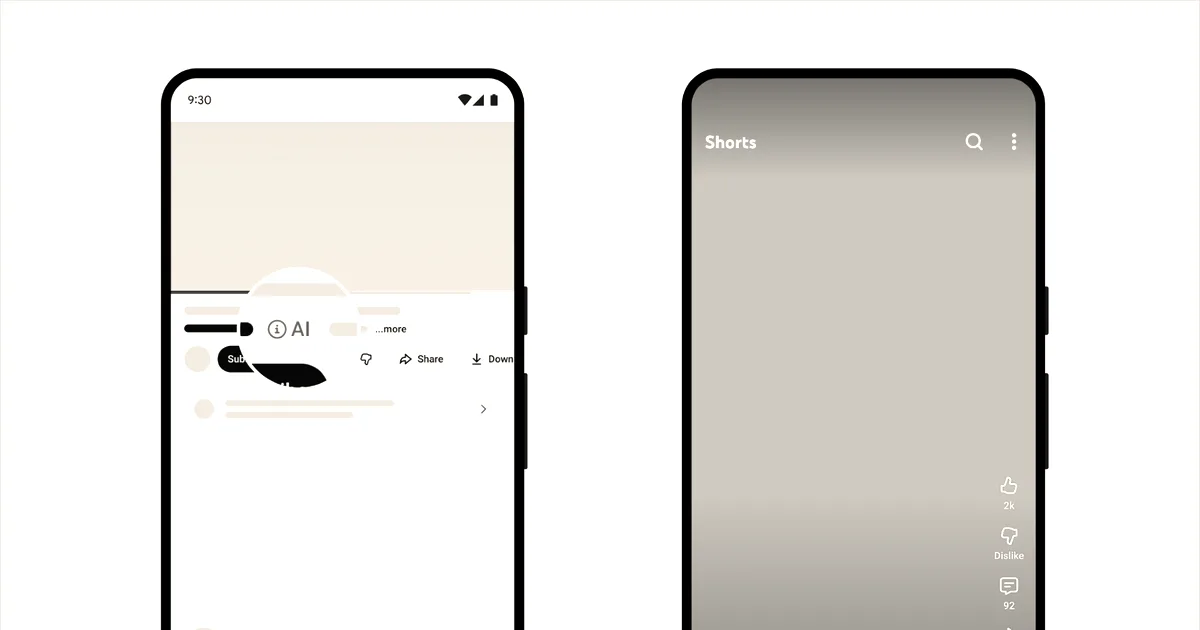
On Wednesday, YouTube announced a new automatic labeling system, shifting away from relying solely on creators to disclose their use of artificial intelligence. Under this new system, the platform will automatically label videos when its internal systems detect that “significant photorealistic AI” has been used. While creators are still expected to disclose their use of AI, YouTube will now apply the label on their behalf if they neglect to do so.
Starting in May, YouTube began using new internal signals to identify AI-generated content. The platform will also permanently attach labels to videos when the content contains metadata from the Coalition for Content Provenance and Authenticity (C2PA), an industry standard for digital provenance. This metadata indicates the video was fully AI-generated. Several industry partners have committed to the C2PA standard, including:
- OpenAI
- Nvidia
- Kakao
- ElevenLabs
These technical updates follow Google’s release of Gemini Omni, a family of multimodal AI models, at its Google I/O developer conference last week. Despite these updates, YouTube says its policy around AI labeling has not changed. AI labels have been in use on the platform for over two years, following an update that required creators to disclose AI content in Creator Studio. The company also asserts that these AI labels will not have an impact on how a video is recommended or its ability to monetize.
To make the disclosures more obvious, YouTube is increasing the prominence of these labels. Previously, labels appeared in the expanded description unless the video touched on sensitive topics like health or news. Now, for long-form videos containing photorealistic AI, the labels will appear directly below the video player, above the description. For YouTube Shorts, the labels will be overlaid directly on the video. In contrast, content that is unrealistic, animated, or only slightly altered—such as an imaginative scenario—will only display a label in the expanded description.
While creators whose content was misidentified will be able to update the disclosure status of their videos, they will not be able to remove those labels if the content was created with YouTube’s own AI tools, such as Veo or Dream Screen.
Why it matters
This move signals a shift toward platform-enforced transparency for AI content, reducing the burden on creators while standardizing how audiences identify photorealistic AI across the platform.